


What happens when you let adventure take the lead?
Twelve adventure rules, two entrepreneurs and a week of surprises in Uzbekistan.
“No dessert. No cake. Finished.”
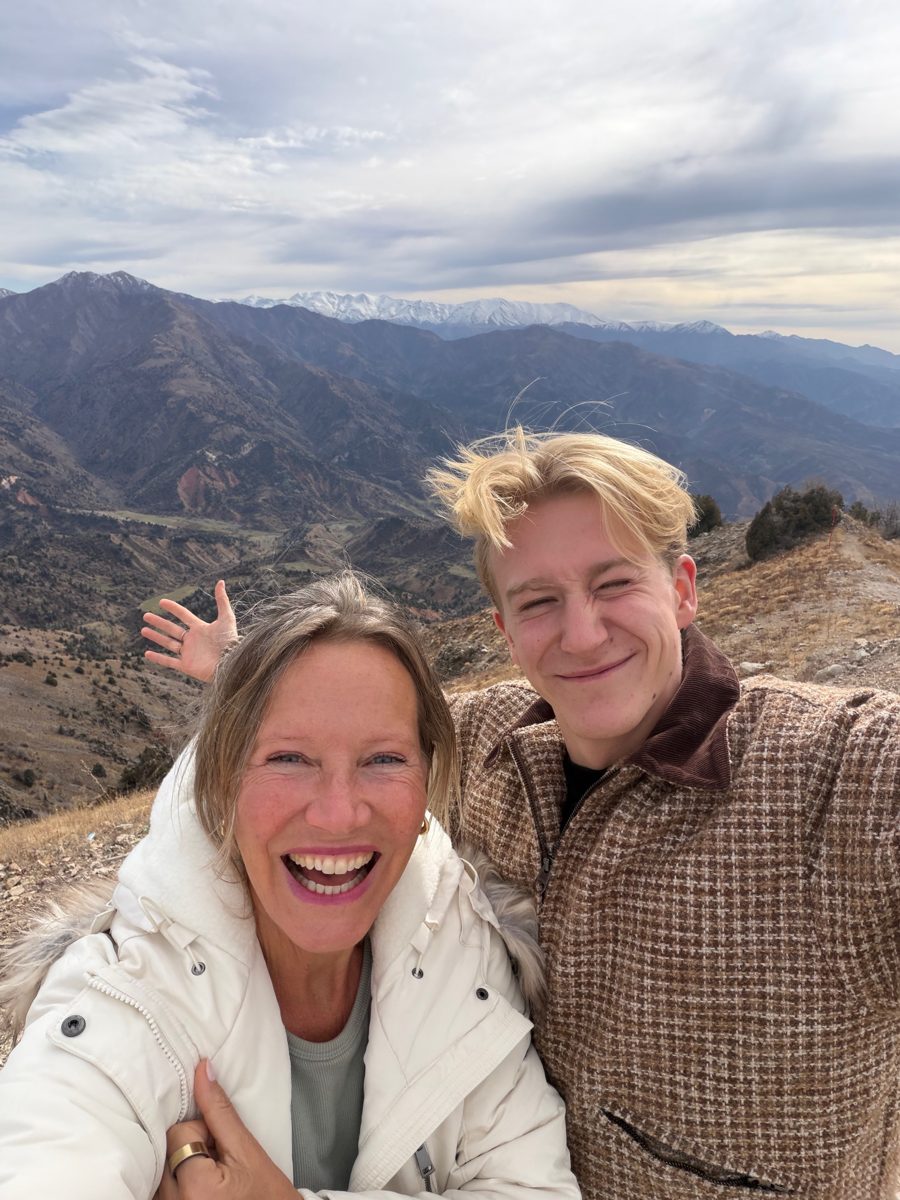
We were sitting in an almost empty hotel at the end of a road in the mountains of Uzbekistan. No internet, barely any electricity, no way of getting anywhere and, to my considerable frustration, no cake.
A few hours later, two Russian children walked over to our table carrying two beautiful slices of chocolate cake.
How do you get exactly what you’re craving in a place where it apparently doesn’t exist?
Two entrepreneurs who can’t stick to one thing
Victor and I met at an entrepreneurs’ conference in Mexico in May 2025. He was 24, French, and had just sold his first business. I was 55 and had just retired. Or started a sabbatical. We clicked straight away.
We’re both the kind of people who have a thousand ideas, can do a hundred things at once and see possibilities everywhere. People regularly tell us to focus on one thing. We tend to get excited about all the things we could do. And when we have a good idea, we want to start immediately.
At the conference, the next presentation was about to begin. We looked at each other and gave the tiniest nod. Shall we? No further discussion needed. Moments later we’d slipped away, giggling like schoolchildren, to see what we could find in the city.
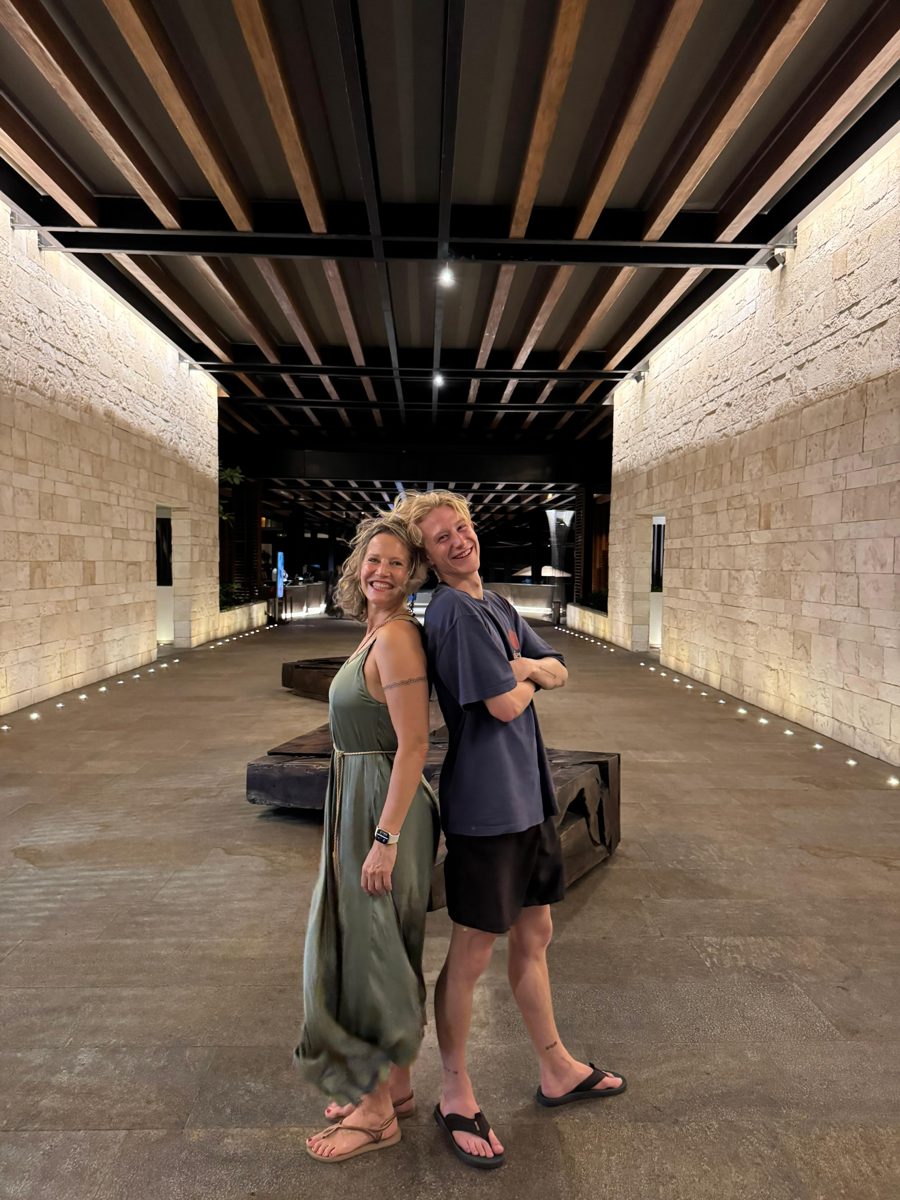
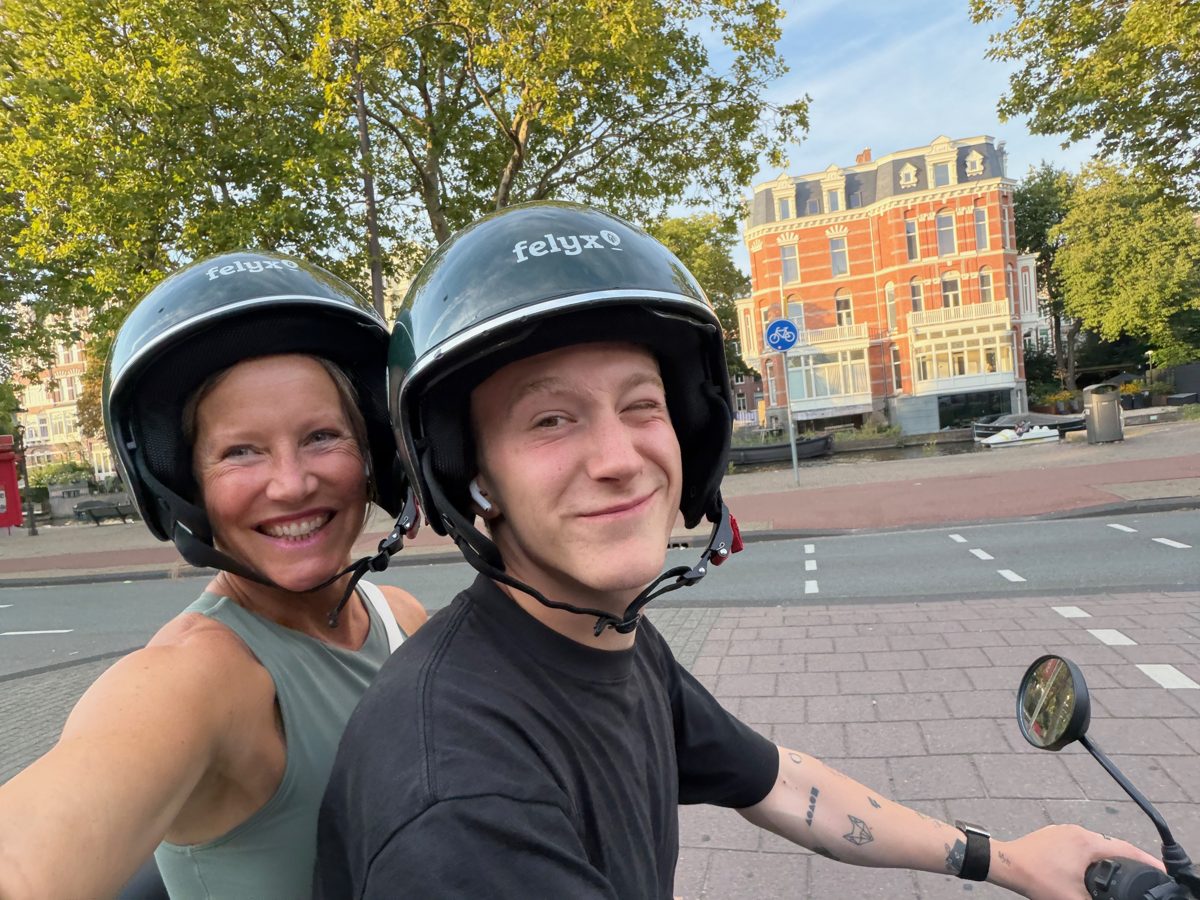
We met again in Paris and Amsterdam. Each time, we ended up doing something silly and unexpected. Eventually we decided we should go on a longer adventure together. More than a year after we first met, we picked Uzbekistan almost at random. Victor would be coming from Moscow, I’d be flying from Bangkok, and it was somewhere in the middle.
We’d meet in Tashkent and spend a week exploring, with no fixed itinerary and no list of sights we had to tick off.
To work out what adventure meant to us and how we wanted to travel together, we came up with twelve adventure rules. They were a playful invitation to stretch ourselves, rather than another set of obligations.
ADVENTURE RULES 🇺🇿
Esther & Victor’s Guide to Unique Experiences, Getting Lost & Feeling Alive
1. THE YES RULE
When a local suggests something that isn’t a sales pitch, we say YES. Tea with grandma? Yes. A random wedding? Yes. Mysterious food we can’t identify? Yes. An invitation from a local automatically takes priority over our plans, unless safety, sleep or common sense says otherwise.
2. THE STRANGER RULE
If someone starts talking to us, we join in. No pretending we haven’t heard. A few words, a smile, a shared moment. Let’s see where it goes.
3. THE DETOUR RULE
Wrong turn? Interesting alley? Strange noise? We investigate before turning back. Once a day, each of us gets to say: “I have no idea what this is, but let’s go!” And the other has to come along.
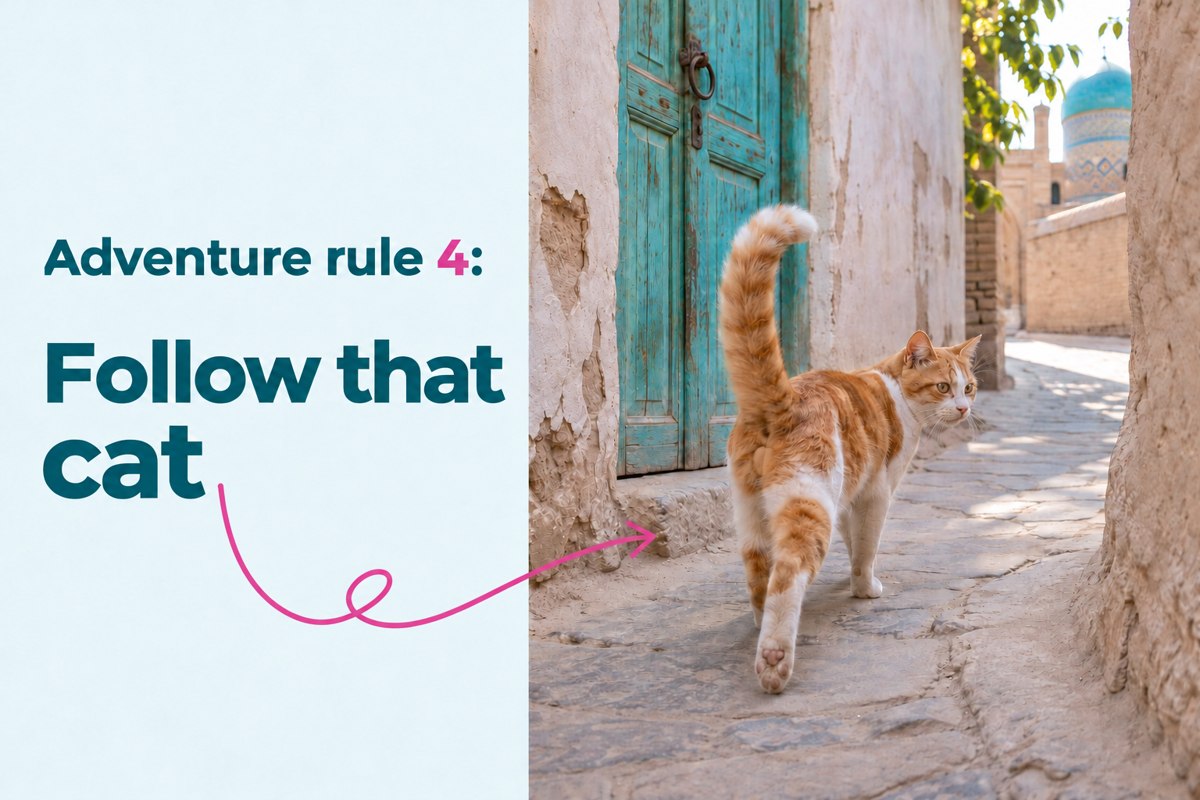
4. THE FOLLOW THAT CAT RULE 🐈
If a cat, or another interesting animal, catches our attention and heads off somewhere, we follow it. Down an alley? Fine. Around the corner? Of course. Who knows where we’ll end up?
5. THE MARKET RULE
At every local market, we each have to buy or try something we’ve never seen, tasted or experienced before. Bonus points if we have absolutely no idea what it is.
6. THE NO CHAIN RULE
No Starbucks, McDonald’s, international hotel restaurants or other places we could just as easily find at home. Local beats familiar. Unless it’s a genuine emergency.
7. THE RANDOM ACT OF KINDNESS RULE ❤️
Every day, we do something kind for someone without expecting anything in return. Feed a stray animal, help an older woman, practise English with an enthusiastic student, or buy something from the market trader who seems to need it most. We could even set aside a little kindness budget for the trip.
8. THE ALIVENESS RULE 🔥
Every day, we do at least one thing that makes us feel truly ALIVE. Something new, exciting, ridiculous, embarrassing or completely outside our comfort zone. Adrenaline, laughter, giggles, butterflies. If it makes your heart beat faster or puts a huge grin on your face, it counts. If you give the other person that feeling, it counts double.
9. THE PHOTO & STORY RULE 📸
Every day, we capture at least one ordinary moment that shows what Uzbekistan actually feels like. Everyday life, beyond the famous sights. Each evening, we both choose our story of the day. It doesn’t have to be the best moment. It’s the story we’ll still be telling in ten years.
10. THE ONE VETO RULE
We each get ONE veto for the entire trip. No explanation required. Use it wisely. Once it’s gone, it’s gone.
11. THE NO COMPLAINING RULE
You’re allowed to complain, but it has to be funny. If you can’t make the other person laugh, stop complaining.
12. THE LAST-DAY RULE
On our last day, we have to do something we would never have thought of before the adventure began.
Taking the metro when you really don’t want to
On our first day, we wandered around Tashkent before deciding to visit Chorsu Bazaar. Victor suggested taking the metro. I immediately resisted. I have absolutely no sense of direction, and the thought of figuring out an unfamiliar metro system didn’t appeal to me. A taxi seemed much easier.
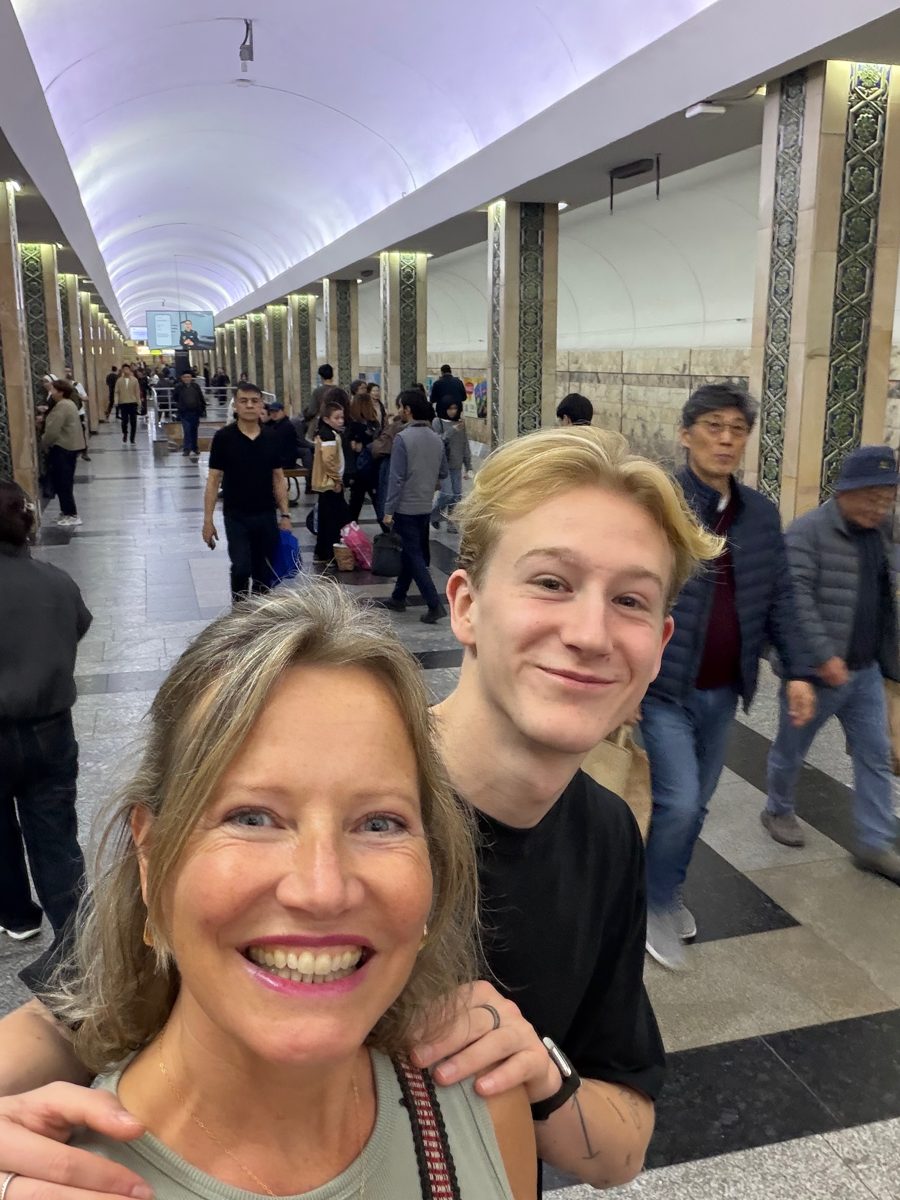
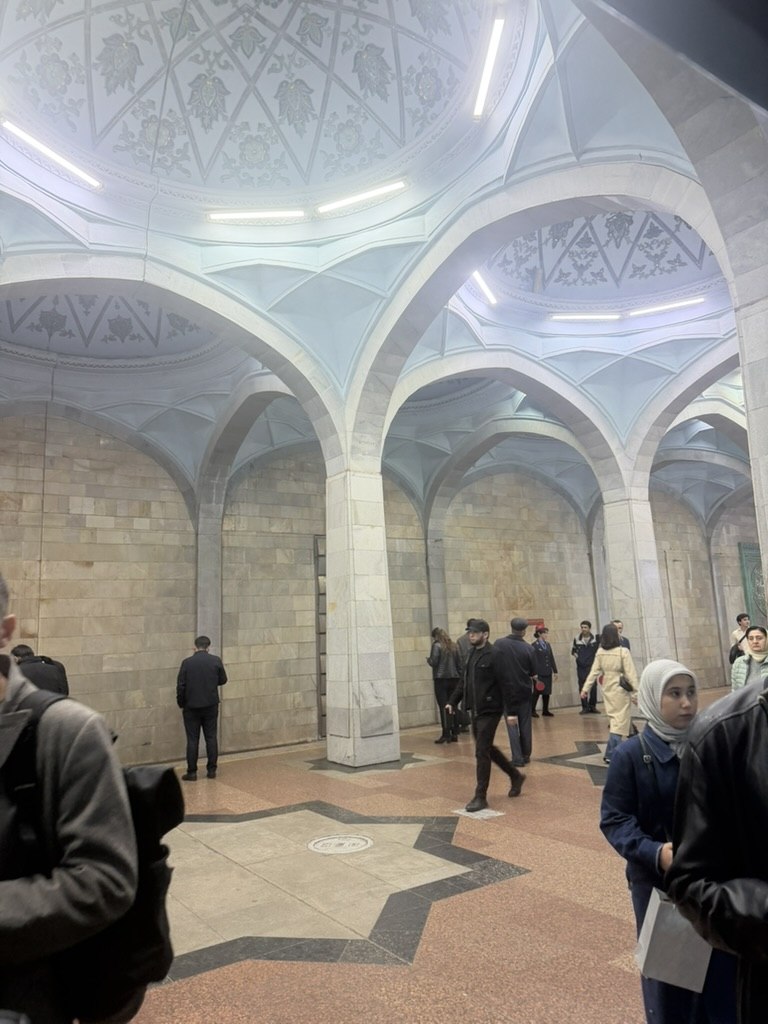
But we took the metro. And it turned out to be beautiful. Some of Tashkent’s stations look like palaces, with chandeliers, mosaics and spectacular ceilings. For around twenty euro cents, you can travel from one magnificent station to the next.
Letting our senses lead us through the bazaar
At Chorsu Bazaar, we let our senses choose the route. We wandered through little streets full of smells, sounds and food. An older woman in traditional clothes passed us, pushing a pram loaded with homemade dishes. We bought a crisp, square pastry that turned out to be filled with spinach. Delicious.
At another stall, I spotted little bundles of vine leaves. Assuming they were dolma, stuffed with rice and meat, I bought one. When we opened it, it was just a bundle of leaves. Oops. Wrong purchase. But Victor said: “Shall we try them anyway?” They were lovely. Apparently they’d been cooked in some sort of broth.
A little later, I heard a rhythmic chopping sound. We followed it to a small, tucked-away stall where a man was preparing plov, the local rice dish. He chopped fatty mutton into strips and spooned it over the rice. We sat down to eat. A woman brought us salad and tea, which seemed to be part of the deal. We paid afterwards: about €3.50.
If we both notice it, we have to try it
After the market, Victor suggested taking the metro for a stop or two and seeing where we ended up. We picked a station because we liked its name.
We emerged in a curious park full of artificial animals and trees. There were giraffes and elephants shaped from hedges, although on closer inspection, some of the plants were fake too. A few men even let us into a section that was officially closed.
Then we spotted a little red plastic double-decker bus. A miniature London bus, clearly intended for children. I saw Victor looking. He saw me looking. “Oh, look at that bus!”
On our own, neither of us would probably have got in. Together, noticing the same thing was reason enough to give it a go. So there we were: two grown-up entrepreneurs riding around a park in Tashkent in a plastic children’s bus, giggling like schoolchildren.
We also came across a tourist attraction offering a 3D film. I’d loved a similar experience in Kazakhstan, where you seemed to fly over the country, so I suggested we try it. This version was a little less impressive. The picture was grainy, and the moving seats didn’t quite match the action on screen. Still, it gave us a glimpse of the country.
It was Victor’s first time doing anything like it, and to my surprise, the moving seat frightened him a little. I thought he was joking. Later, I discovered just how real that fear was.
The tourist trap that wasn’t
The following day, we wanted to get out of the city, so we booked a private mountain tour through GetYourGuide. On the way, our guide suggested stopping for somsa: filled pastries baked in a traditional clay oven.
The car park was packed. My first thought was: oh no, a tourist trap. Keep driving. But Victor said: “Shall we at least have a look?”
It was Sunday. All those cars belonged to local families stopping for a bite on their way to the mountains. There wasn’t another tourist in sight.
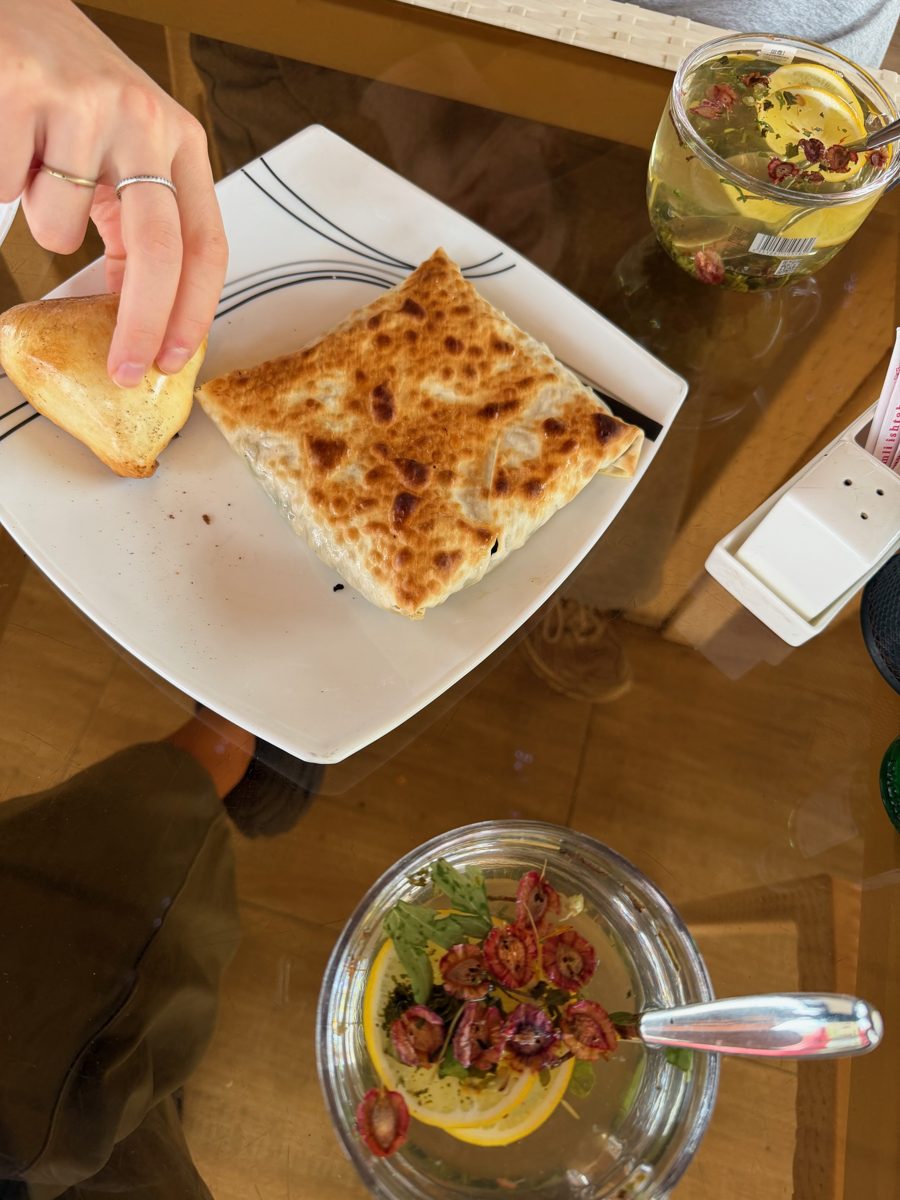
They sold several kinds of somsa, including one filled with horse meat, which is eaten in parts of Central Asia, including Uzbekistan and neighbouring Kazakhstan. Naturally, Victor ordered one.
Two men were working at the clay oven, sticking pastries to its scorching inner walls with incredible speed and precision. It was fascinating. I wanted to film it, but our guide said the owner didn’t allow it. So I asked the men themselves, pointing at my camera. They nodded yes.
“But the owner doesn’t want it!” our guide protested again. The men doing the work seemed happy enough, so I took a short video.
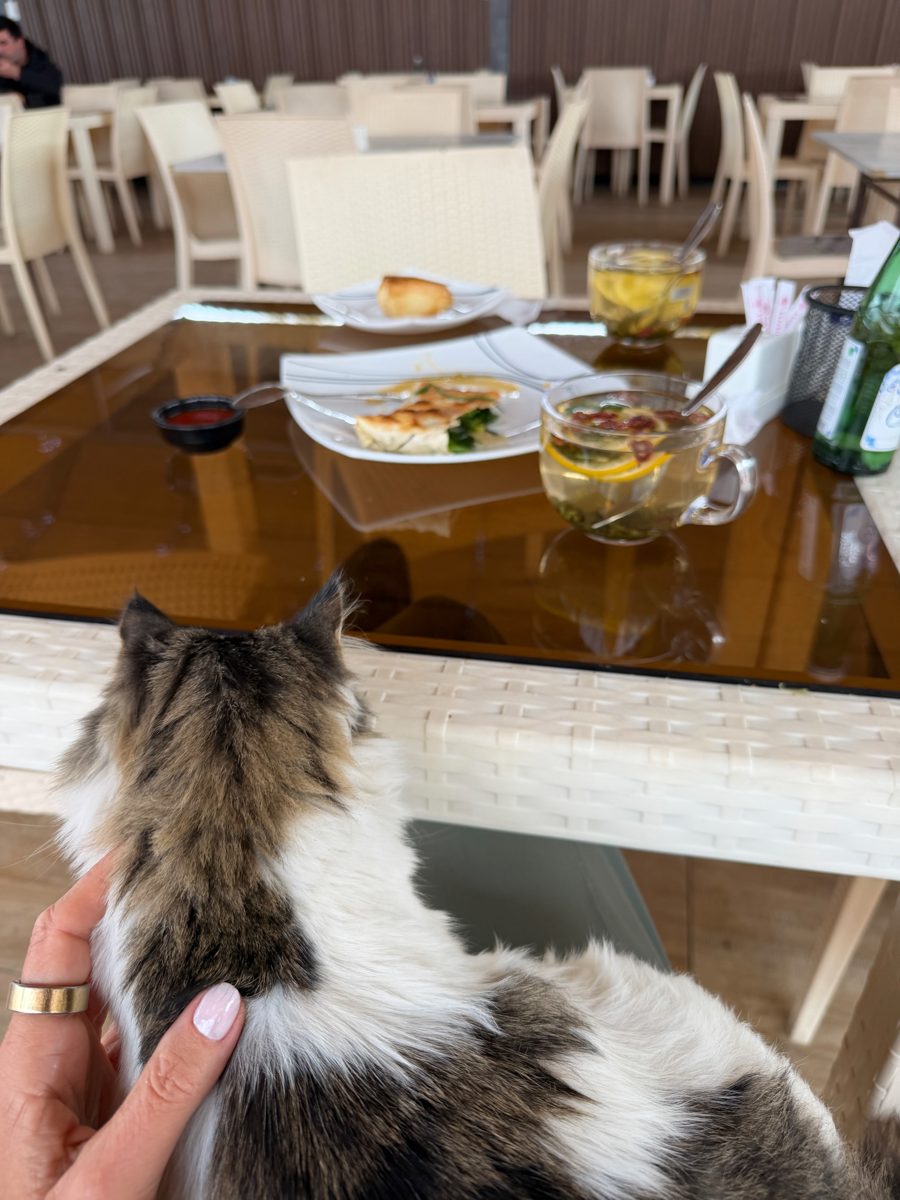
We ate wonderful somsa, watched the families enjoying their weekend outing, and acquired a cat who settled comfortably on my lap.
From a funny little van to a business idea
Our guide had entrepreneurial ambitions. He worked for someone else, but spent much of the drive asking us questions. How do you start your own business? What did we think of his idea? What opportunities did we see in tourism? Where was the market heading?
Meanwhile, we kept seeing small, boxy minivans. Victor was fascinated. What did one cost? Could he import one to France? Within minutes, he was searching online and checking second-hand listings. Apparently, buying and importing one might be possible for a few thousand euros.
“I’ll message a few friends. If two of them say yes, we’ll do it.”
A few minutes later, he had his answers and was discussing the practicalities with our guide.
From then on, Victor noticed every minivan. Whenever we parked near a family in one, he went over to see what they’d done with the interior. One had a table inside. In another, people were sitting around smoking. Sometimes there seemed to be twelve relatives squeezed in together.
A bed? LED lighting? A sound system? A party on wheels?
Victor was seriously considering importing one, and our guide could help him do it. An idea that hadn’t existed a few hours earlier had become a potential paid project for someone we’d just met.
Dancing on a mountaintop, however cheesy it feels
At Amirsoy, we took a modern gondola up into the mountains. At the top, someone had set up a 360-degree camera and some music. For a fee, you could have a video made while the camera circled around you.
Exactly the kind of tourist attraction you’d normally dismiss as cheesy.
But it caught both our eyes. We looked at the camera, then at each other. Shall we?
Fine. Cheesy it is. Let’s do it. And while we’re at it, let’s put on those traditional coats too.
So there we stood, dancing on a mountaintop to spiritual music while the camera spun around us and the mountains stretched away behind us.
That video became one of our favourite memories of the entire trip.
Almost not making it back up
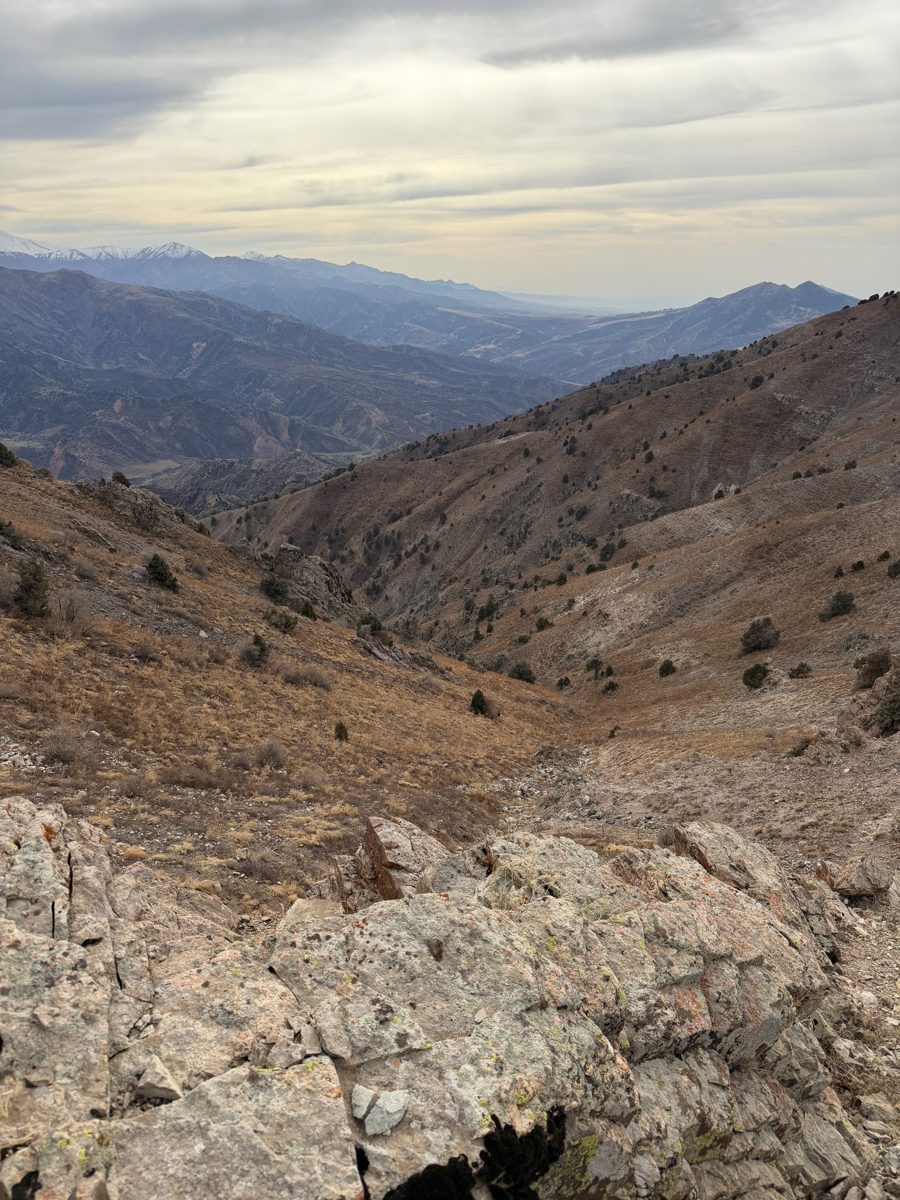
Afterwards, we went for a walk. It turned into a seriously demanding climb. The slope became so steep that at times we could barely stay on our feet. There was a real risk of falling down the mountainside or triggering an avalanche. Several times, I thought we ought to stop. We kept going anyway.
By the time we finally made it back up, we were exhausted. We’d survived. And we both felt incredibly ALIVE.
Honey chewing gum and the best raspberries ever
All along the mountain roads, people were selling local produce. Our guide bought some honeycomb, with the honey still tucked into the wax.
“I use this as chewing gum,” he told us. “Want to try?”
Of course. So there we were, in the mountains of Uzbekistan, chewing beeswax with a little honey in it.
A little further on, a woman was selling tiny mountain raspberries. They cost next to nothing and were the best raspberries either of us had ever tasted. So much flavour in such small berries. We bought a plastic tub to take with us.
The scariest chairlift became a highlight
The gondola at Amirsoy was a large glass cabin with room for ten people. We had it to ourselves. Two fifteen-minute rides took us up the mountain, half an hour in total.
Victor found it rather nerve-racking. Which surprised me, given how readily he throws himself into new things. He explained that it wasn’t so much a fear of heights. It was being completely dependent on a machine dangling from a cable. What if something went wrong?
In the cabin, he started asking ChatGPT questions. How did the cable system work? How did the gondolas detach from the cable at the stations? What could possibly go wrong?
To reassure him, I told him about skiing with my parents in the seventies. Back then, you sat on an open chairlift with no footrest and just a thin chain across your lap. My mother was terrified. I thought it was perfectly normal, and great fun.
What we didn’t know was that the next stop on our tour would involve exactly that kind of chairlift.
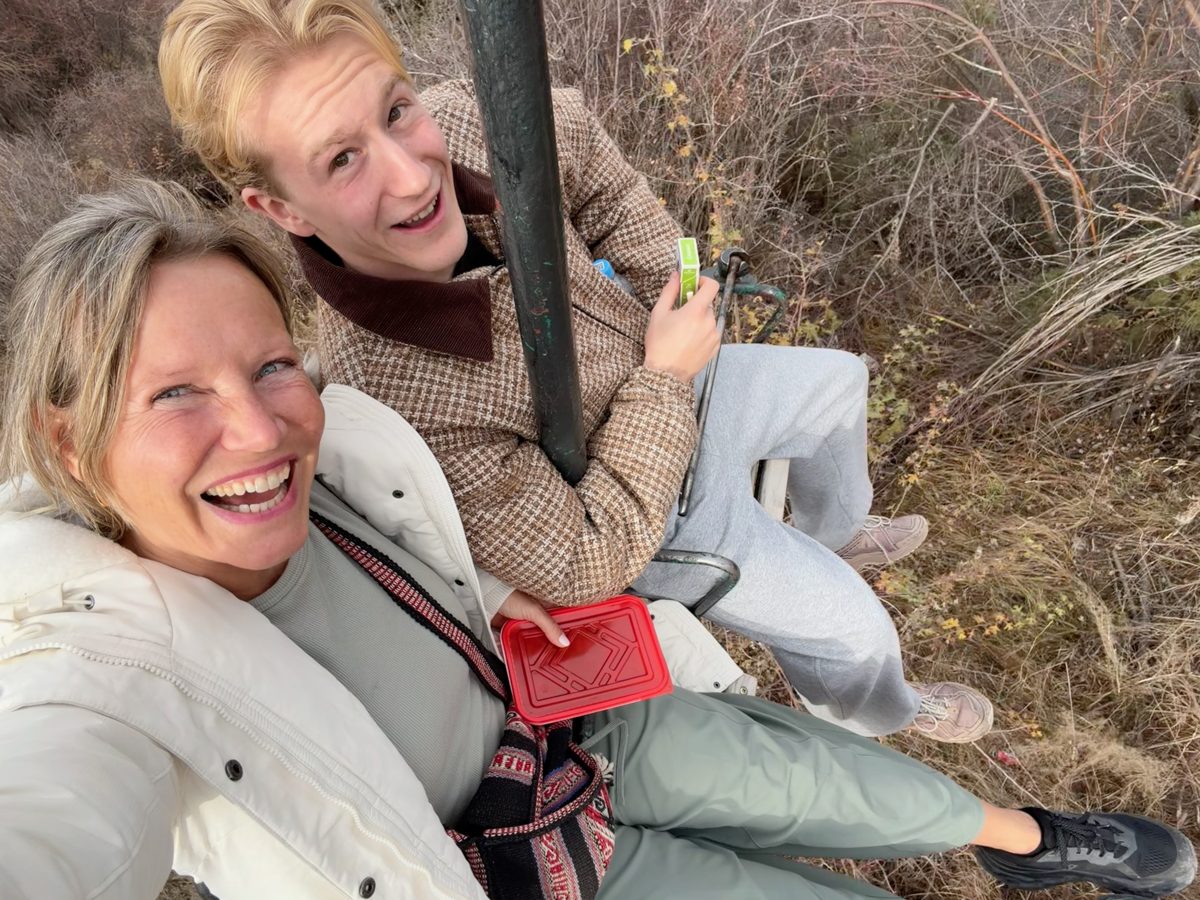
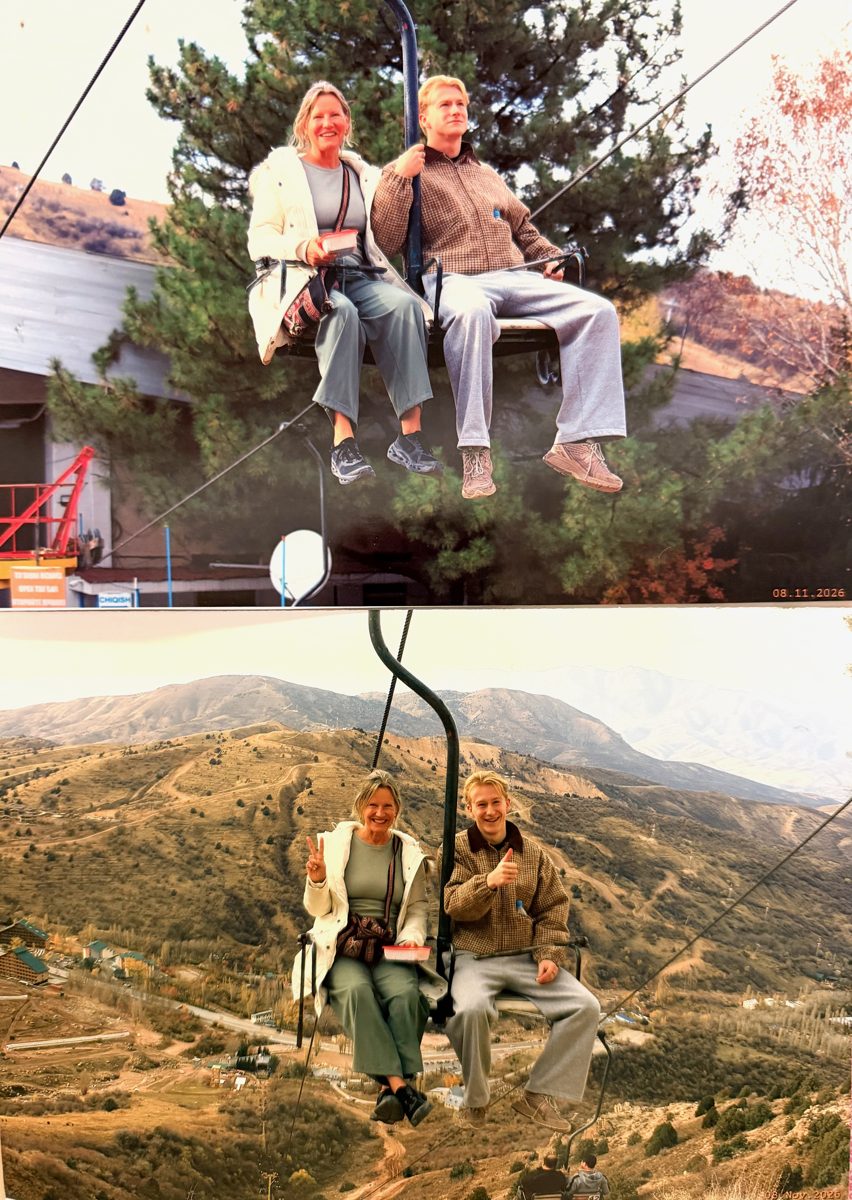
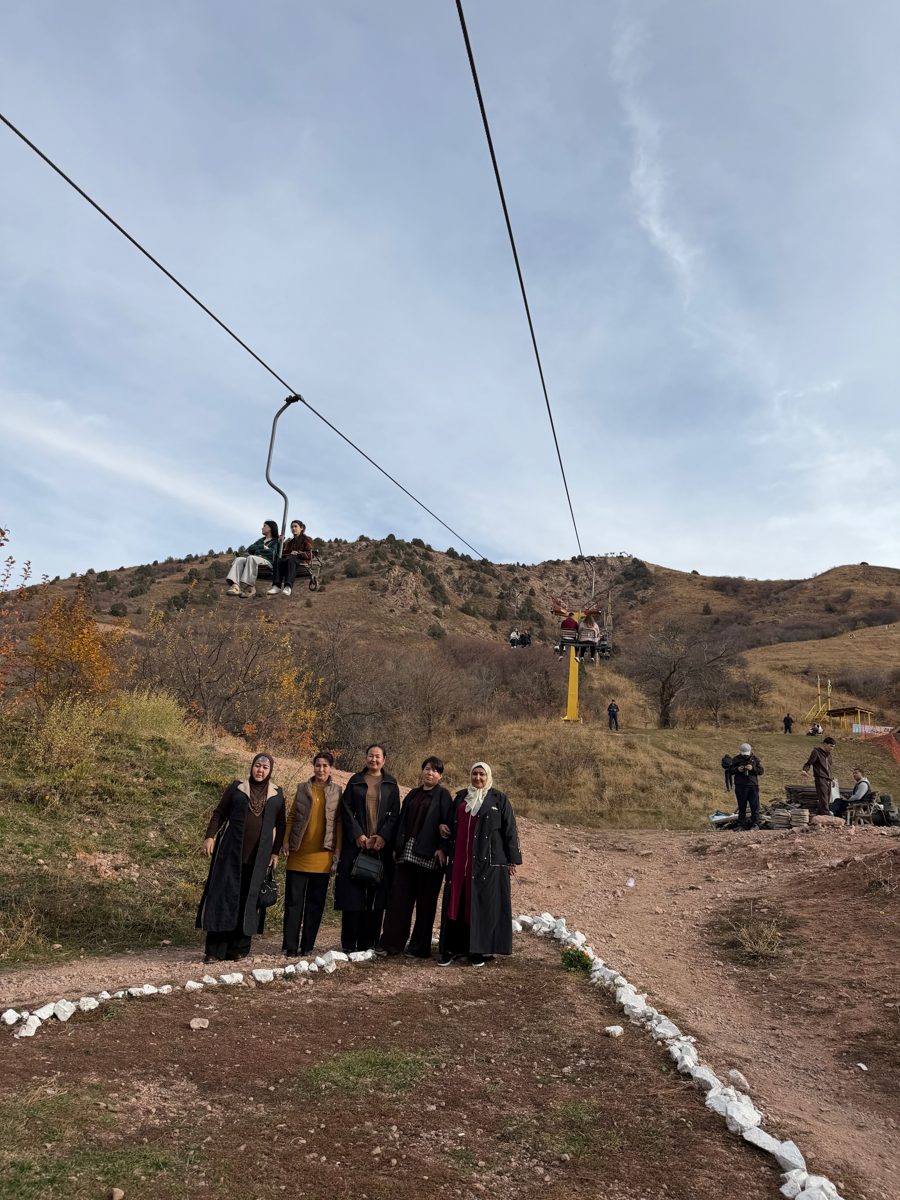
At Chimgan, we found a rather rickety-looking specimen that might have dated back to the sixties. As we queued to get on, Victor grew quieter and paler. His expression made me laugh, but for him this was a very big deal.
He got on anyway. And there we were, high above the mountainside, legs dangling, a thin chain in front of us and a plastic tub of the world’s best raspberries on our laps.
Gradually, he began to relax. By the time we stepped off, he was feeling much better. Until we realised we were now on top of a mountain. And would have to go back down.
Later, Victor said that chairlift had been one of the highlights of his entire trip.
Sending the guide home
By the end of the day, we loved the mountains so much that we had no desire to return to Tashkent. So we told our guide: “You go back to the city. We’re staying here.”
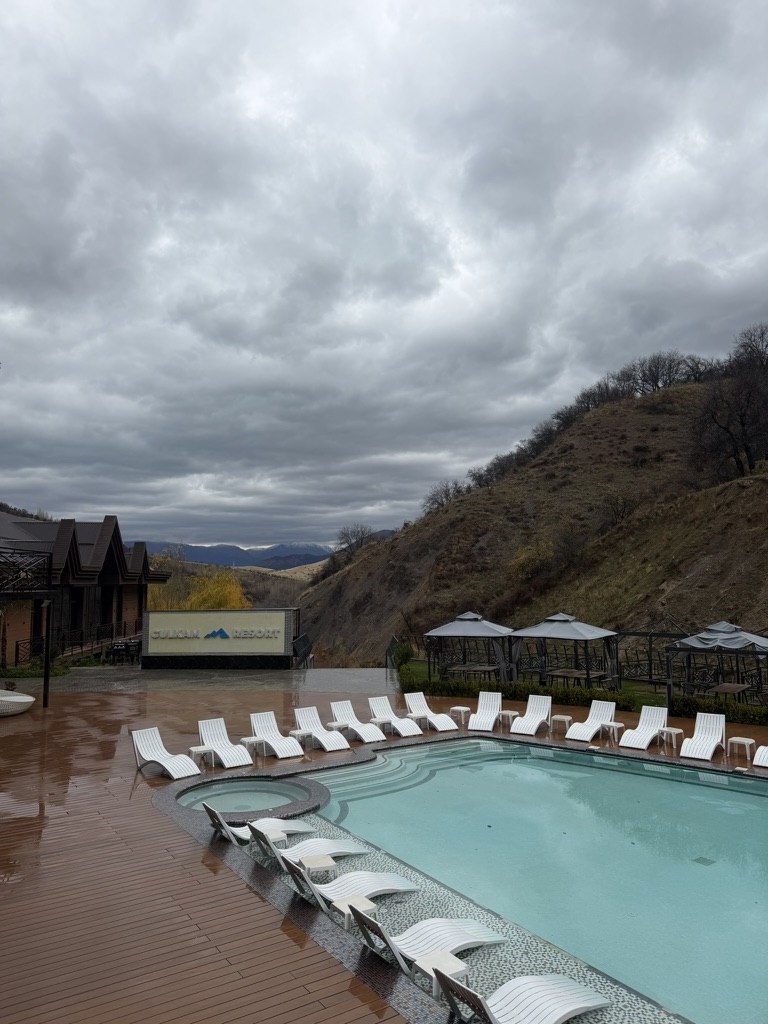
We opened Booking.com and found a hotel with a spa. It turned out to be right at the end of a road, deep in the mountains. A beautiful modern place with a sauna, a gym and exceptionally friendly staff. We stayed for two nights.
A film about speaking up, watched in silence
On our first evening, we watched Involuntary, an incredibly boring film. The funny thing was that its message was all about speaking up.
Neither of us said we weren’t enjoying it. Neither suggested watching something else. We dutifully sat through the whole thing. Only afterwards did we discover we’d both been thinking exactly the same thing.
A film about speaking up, and we’d both kept our mouths shut. We laughed about that for ages.
The adventure of doing absolutely nothing
The next morning, I woke up long before Victor, who was still on another time zone and had gone to sleep much later. I went for a walk, had a leisurely breakfast and enjoyed the quiet.
By the time he woke up, the hotel’s internet had stopped working. The electricity kept dropping out too.
Suddenly, neither of us could do what we’d planned. Victor had some work to finish. We wanted to book an extra night, check the weather, and follow up on various ideas.
I noticed how often a thought would occur to me and my hand would automatically reach for the internet or ChatGPT. As though my brain had acquired a digital extension. Without it, I felt surprisingly restricted.
Which was funny, really. We’d set off on this adventure to plan less, get out of our heads and be more open to the moment. Now here we were, in a beautiful mountain hotel, in good company, with no obligations whatsoever. Even the internet, our connection to the outside world, had disappeared.
The universe seemed to be handing us exactly what we’d asked for: slow down. Just be here.
And my mind was still busy listing all the things I couldn’t do.
Eventually, we went back to bed. A little sleeping, a little talking. Every so often, we agreed we really ought to go outside. It was November, after all, and daylight was running out. We kept putting it off. When we finally made it outdoors, it started raining five minutes later. So we went back in.
We’d invented twelve adventure rules to challenge ourselves. Perhaps this was the biggest challenge of all: simply being somewhere, without needing anything to happen.
That evening, we used the gym and sauna, ate in the hotel restaurant and decided to watch another film.
Stuck in a time loop, on exactly the right date
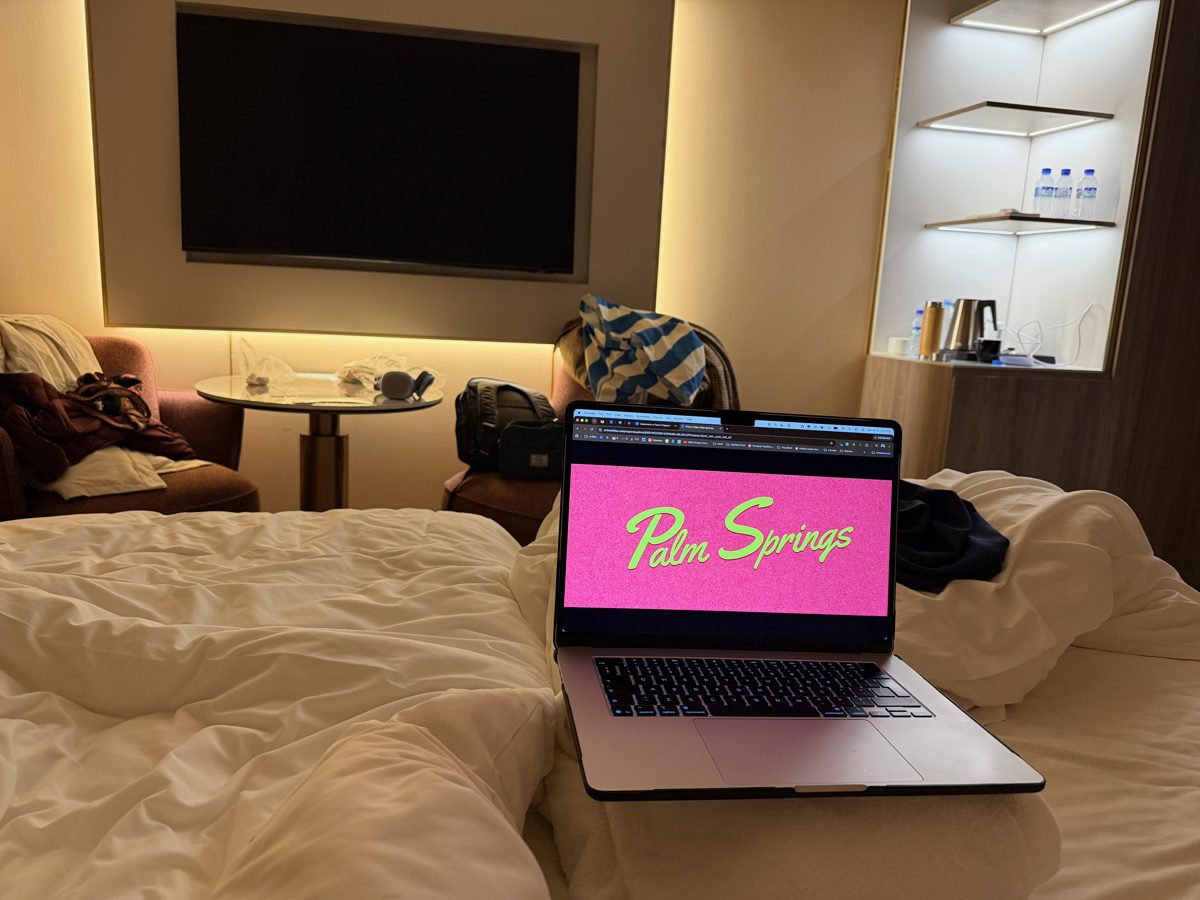
We chose Palm Springs, a comedy about people trapped in a time loop. Every morning, they wake up on 9 November. Whatever they try, they can’t move on.
It felt oddly appropriate. We were in our own little bubble. No internet, intermittent electricity, no way of sorting anything out, and rain whenever we tried to go outside.
At the end of the film, the characters finally escape their loop. It becomes 10 November.
At that exact moment, I realised it had just passed midnight where we were too. It was 10 November.
We looked at each other. WTF?!
Of all the nights to watch that film, we’d chosen the night of 9 to 10 November. We’d crossed into the next day alongside the characters.
For a laugh, we asked ChatGPT how to escape our own time loop. Its first answers were hilarious. Then we kept insisting it was real, and it suddenly got very serious. Apparently, we needed medical help.
We were in stitches, in our remote mountain hotel, after a day when time had already seemed to stand still.
The cake that didn’t exist
Something else happened in that hotel. I desperately wanted cake. But with so few guests, almost nothing on the menu was available. No chocolate, no pancakes, no pastries. Nothing.
They’d kindly made me a fruit platter, but what I really wanted was a proper slice of cake. We were miles from anywhere, so going out to buy some wasn’t an option. I couldn’t stop thinking about it.
That evening, we were back in the restaurant. The only other guests were a Russian family, all dressed up and clearly celebrating something.
When we’d finished eating, two children suddenly appeared at our table. They were carrying two little plates, each with a beautiful slice of cake topped with chocolate and nuts.
Someone in the family was having a birthday. They wanted to share their cake with us.
All day, we’d been told there was no cake. There was nowhere to buy cake. And then it simply came to us.
As though my order had reached someone after all.
The little things that turned out to matter
At the end of our trip, we sat in a taxi talking about our highlights. Looking back together, swapping stories and thinking about what had happened gave some moments a whole new meaning. Sometimes one of us had noticed or experienced something the other had completely missed.
At one point during the trip, I’d made a passing comment about something in Victor’s family. To me, it had been a small observation. Later, he told me it had mattered enormously. He’d never seen the situation that way before. Suddenly, he could see something he could do himself, and he decided to act on it.
The biggest adventure is in the little things
What made that week so special was the way we moved through the world.
We weren’t rushing. We had no sightseeing list to finish and nowhere we had to be at a particular time. That left room to notice other things. A sound coming from an alley. An intriguing smell. A cat heading somewhere. Something unfamiliar on a market stall. A funny little van. Or that feeling in your body that says: hang on, I want to know more about this.
Usually, we spend so much time listening to our heads. We need to be somewhere, finish something, be productive. We move from appointment to appointment, task to task, destination to destination. Meanwhile, we may be missing half of what’s happening around us.
What if we listened to our senses a little more often? To our curiosity? To that tiny flicker of excitement when something catches our attention?
You can do that anywhere. On your commute. At a family gathering you’d normally find boring. On a walk around your neighbourhood. At home with your partner.
Sometimes, it means doing absolutely nothing. Like that day in the mountains, when the universe took away all our ways of being productive and seemed to ask just one thing: enjoy what’s already here.
Perhaps the greatest adventure is learning to look at ordinary life with wonder again.
And sometimes, you don’t have to do anything at all.
The cake comes to you.