

Kazakhstan (2026): an unexpected journey along the Silk Road
Before I could head to Uzbekistan to seek out adventure with a friend, adventure had already found me.
After a conference in Bangkok, I was refused boarding on a flight to another destination because my ticket wasn’t in order. I tried to sort out a visa there and then, but no matter how often I tried, the government website kept kicking me out.
Eventually, I took the hint. Perhaps this journey simply wasn’t meant to happen. It was time to let go of my plan.
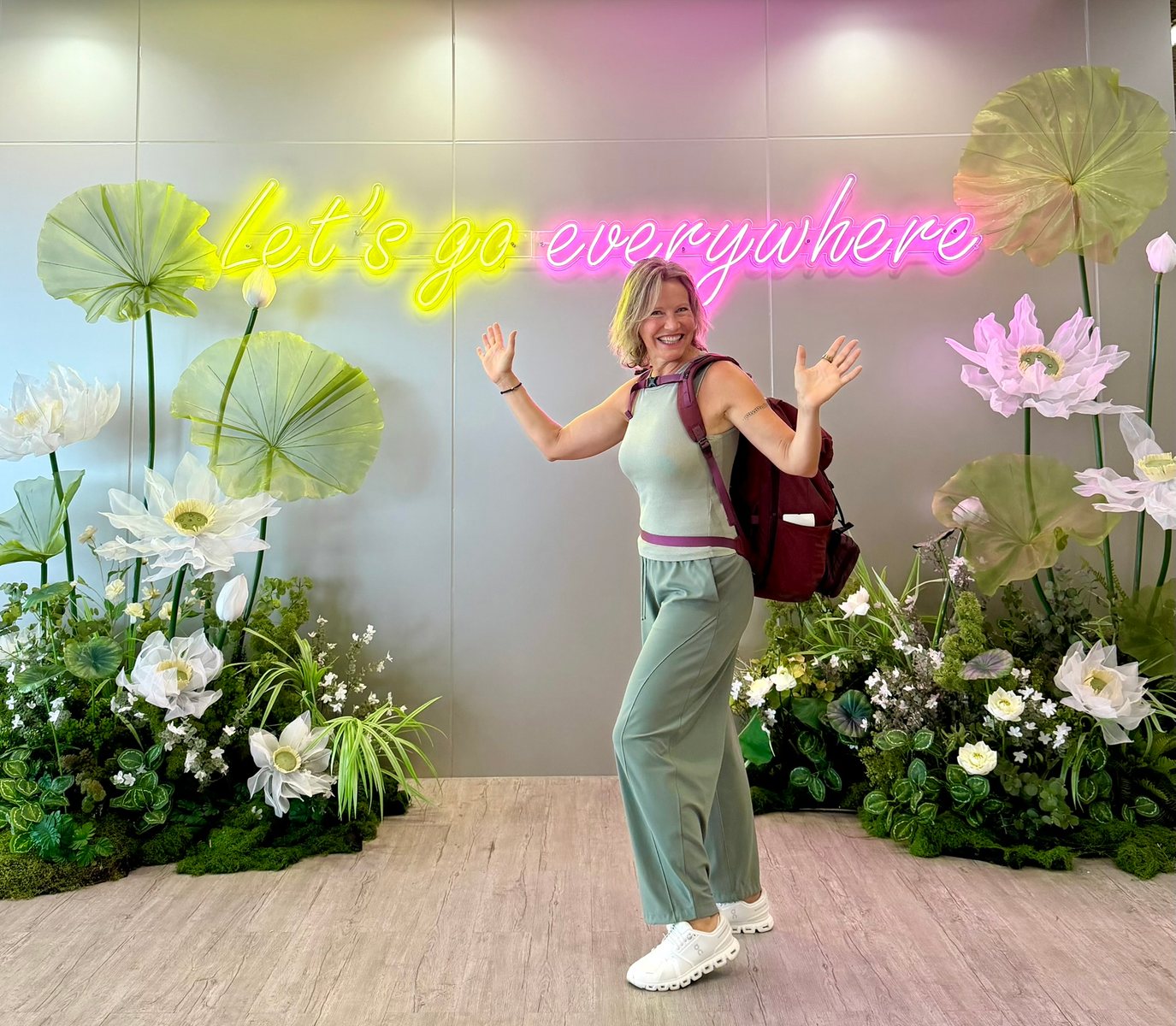
I checked which countries I could visit without a visa, which flights were leaving, and where I hadn’t been before. A few hours later, I had a ticket to Almaty, Kazakhstan.
And so began a journey that would eventually take me overland to Uzbekistan, following part of the ancient Silk Road. Completely unplanned!
In Uzbekistan, the adventure continued. Read my adventure blog about travelling without a fixed plan.
From five-star hotels to three square metres
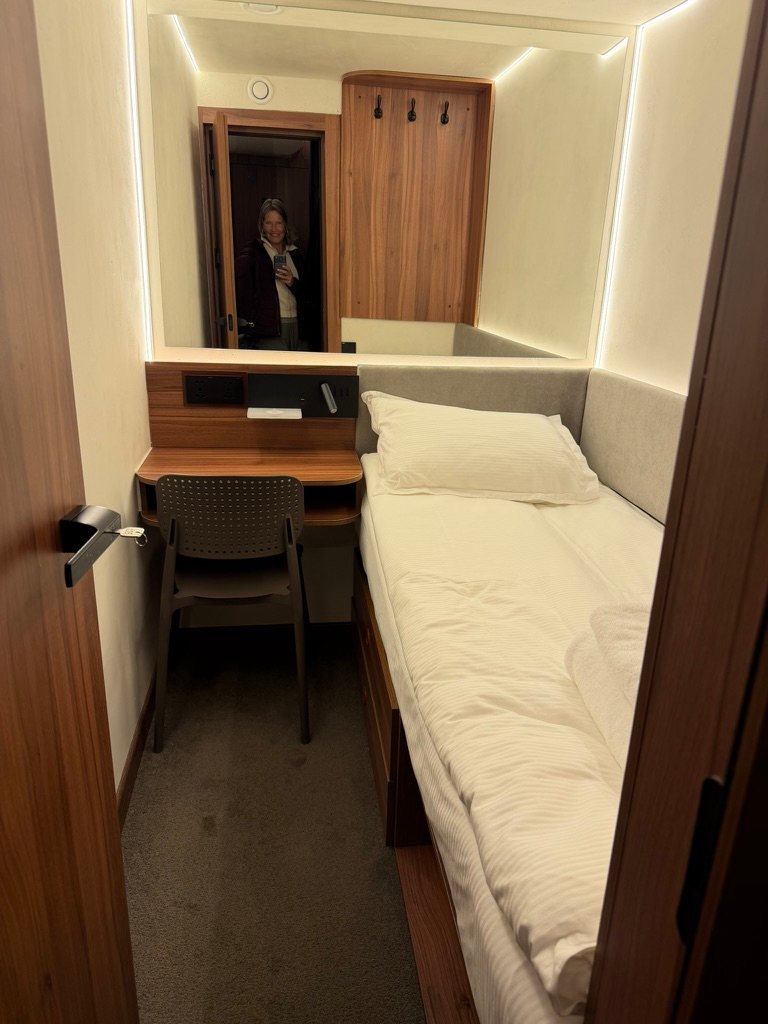
After a few weeks in luxurious five-star hotels in Hong Kong and Bangkok, my new accommodation took some getting used to. My room in Almaty was about three square metres!
But AQ miniSUITES turned out to be a pleasant surprise. Officially a hostel, it felt more like a modern hotel in miniature. The rooms are tiny, but everything is cleverly designed, clean and surprisingly luxurious. An à la carte breakfast is included, and you can use the washing machines for free. A great concept if you don’t need much space.
Fifty years back in time
Everything was grey. The buildings, the streets, the weather, even the people seemed grey. Little colour, few smiles. Signs were in Russian and Kazakh, but Russian was the language I heard most on the streets.
It reminded me of earlier trips through former Soviet countries. That bleak atmosphere, as though all the joy has drained out of the streets, is exactly why I’ve never felt particularly drawn to this region.
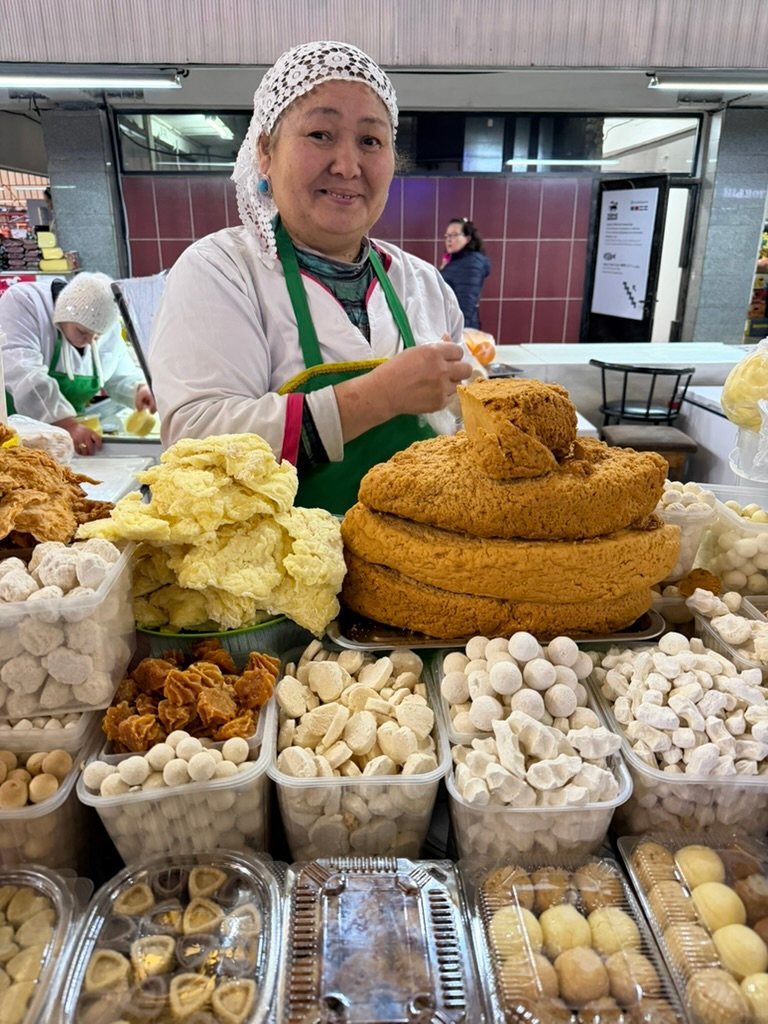
Fortunately, the Green Bazaar showed me a very different side of Almaty. People were laughing, chatting, bargaining and tasting. Women at the stalls offered me all kinds of local specialities, and suddenly the city came to life.
I also noticed how diverse the population was. So many different faces, styles of dress, languages and traditions. Kazakhs, Russians, Uyghurs and many other communities live side by side here.
And the history of this place has a lot to do with that.
The Silk Road: a metaphor for my life?
Kazakhstan lies along the ancient Silk Road, a network of trading routes that connected China with Europe and the Middle East. For centuries, traders, travellers and adventurers passed through here. They exchanged silk, spices, horses and other goods, along with stories, knowledge, ideas and cultures. A kind of internet, long before the internet existed.
Much later, Kazakhstan came under Russian influence and became part of the Soviet Union. It gained independence in 1991. Yet the legacy of the Silk Road is still visible in its mix of cultures and traditions.
The more I learn about it, the more it resonates with me. The Silk Road feels like a beautiful metaphor for my own life.
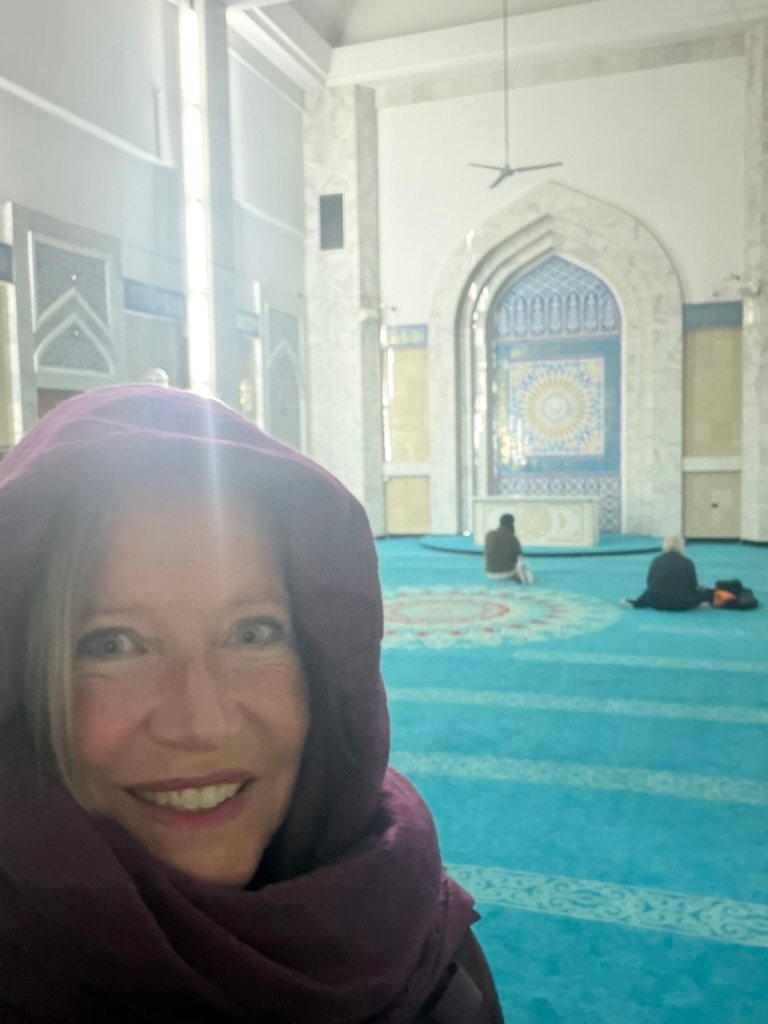
I’m a traveller, entrepreneur, storyteller and trader in ideas. Curious about other cultures, always looking for connections, possibilities and fresh perspectives. I travel with few possessions, yet feel rich in experiences.
Like the travellers who came before me, I know you can’t plan everything along the way. Sometimes you need to take action. Sometimes you need to let go and trust what comes next. I’m still exploring that balance between doing and being myself.
Perhaps the most valuable things we exchange along the way are stories, ideas, inspiration and human connection.
And sometimes the detour turns out to be the destination.
Cheese for the road
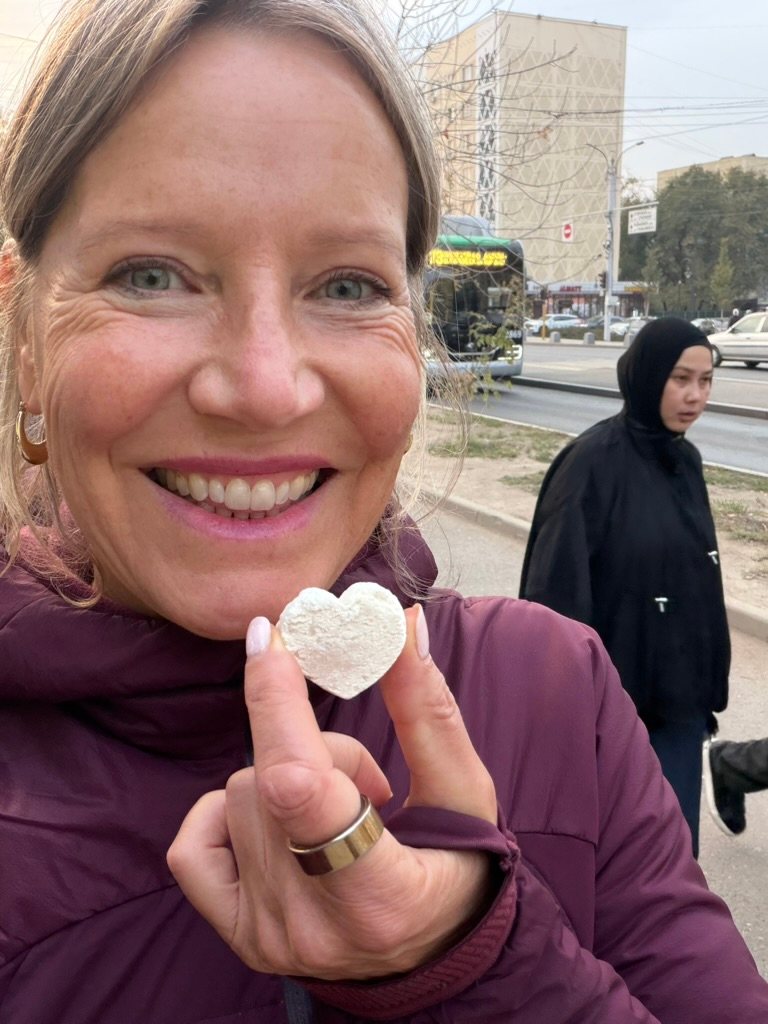
At the Green Bazaar, I see dried cheese everywhere, in all shapes and sizes. It’s called kurt, or qurt, and the women selling it let me try all sorts. Some is almost tasteless, some incredibly salty, and some smoked. Certain varieties crumble in your mouth; others are hard as stone. One woman has even shaped her hard, smoked cheese into little hearts. They look like sweets!
I find the story behind it fascinating. Kazakhstan has a long nomadic history, with people moving across the steppes with their herds. Fresh milk spoils quickly, so they turned it into fermented, salted and dried cheese. It kept for a long time, was easy to carry, and provided plenty of protein and nutrients.
A few of those hard little pieces in your coat pocket, and you always had something nourishing to eat. The perfect travel snack, centuries before anyone invented the protein bar.
Horse meat on the menu
Then there’s the horse meat. It seems to be on the menu everywhere. Slow-cooked, made into sausages or served over pasta: I keep coming across it in different forms. It’s clearly an important part of Kazakh cuisine.
Almaty’s invisible mountains
Almaty sits at the foot of an impressive mountain range. On a clear day, you can see snow-covered peaks from the city and take a cable car up into the mountains.
During my visit, however, the cable car wasn’t running, and such a thick grey haze hung over the city that I couldn’t see a single mountain. Apparently, they were right there!
I hope you have better luck with the weather and get to enjoy that magical view.
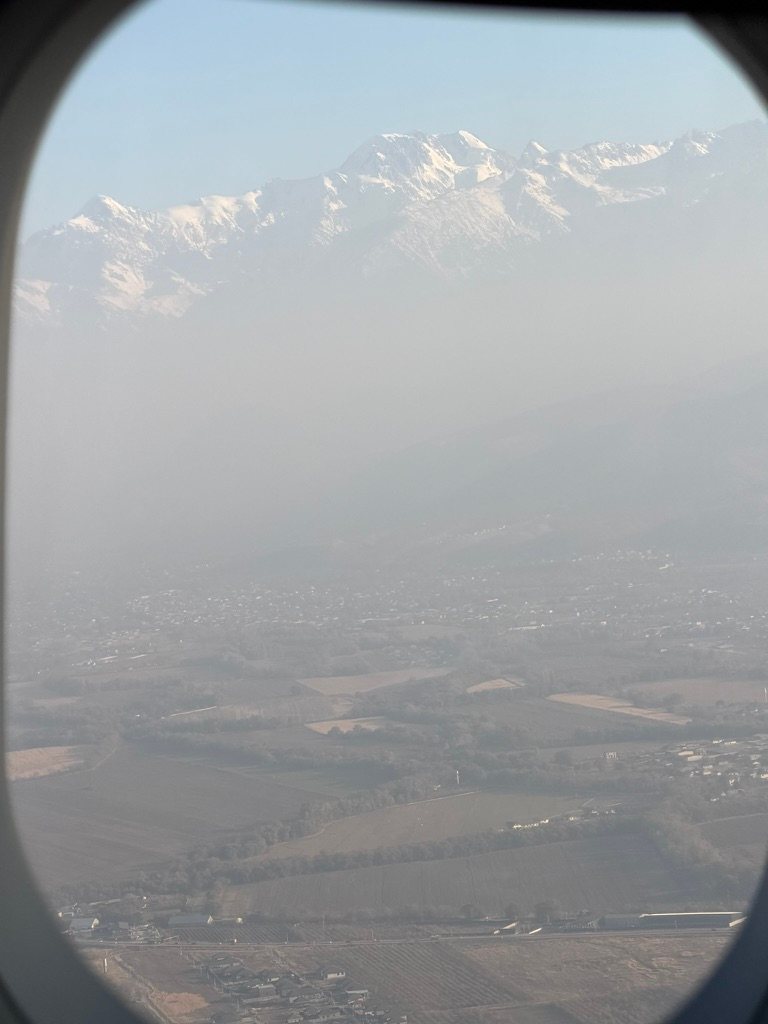
The mountains near Almaty, seen from the plane.
From grey Almaty to a warm welcome in Turkestan
After a few days in Almaty, I flew to Turkestan, a historic city in southern Kazakhstan. What a difference!
There’s something slightly odd about Turkestan too. Much of it is newly built, and at times it feels a little like Disney World. The old mausoleum and the pilgrims who come to visit make it special, but there’s no historic centre to wander through. In places, it feels strangely empty, like a pilgrimage destination surrounded by a brand-new stage set.
The moment I got into the shared taxi, I started connecting with people. A young woman who spoke English taught me my first words of Kazakh. The next day, she even joined me to explore the city.
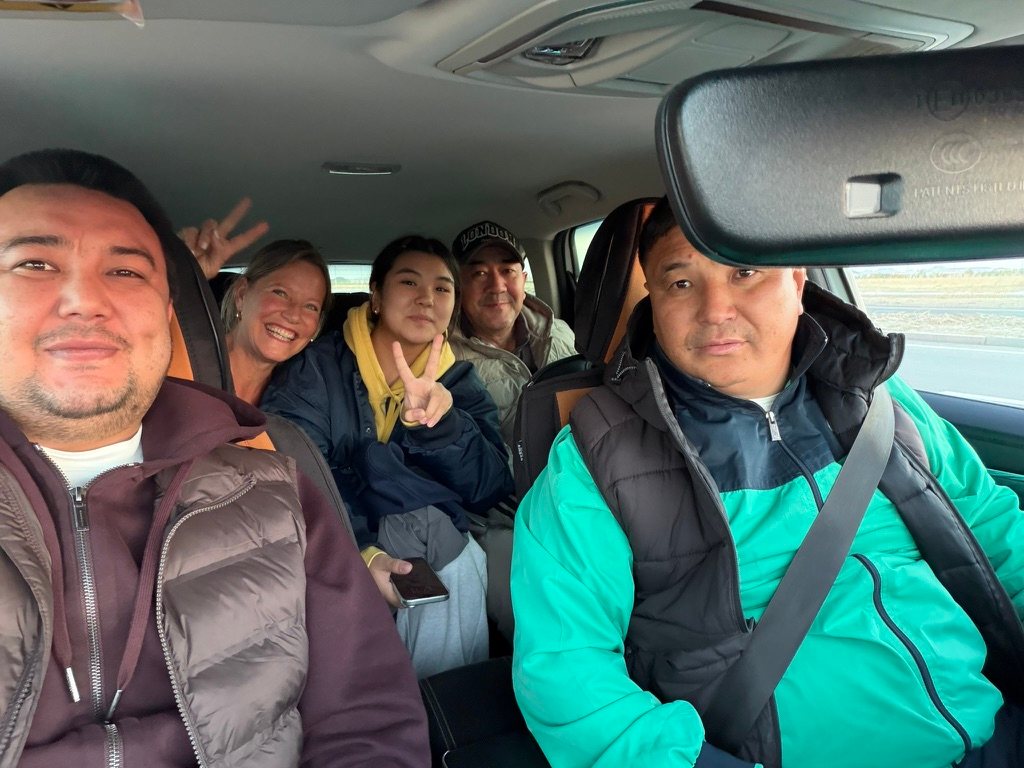
People strike up conversations, invite me along, show me around, ask whether I need anything and offer me local specialities. I feel truly welcome here.
The atmosphere is different too. In Almaty, I mostly heard Russian. Here, I hear much more Kazakh. So I start learning a few words: sälem for hello, raqmet for thank you, and jaqsy for good.
Suddenly, Kazakhstan feels very different. Warmer, more personal, more alive. This is the kind of human connection I love about travelling.
Six hundred years of history and an unexpected flight
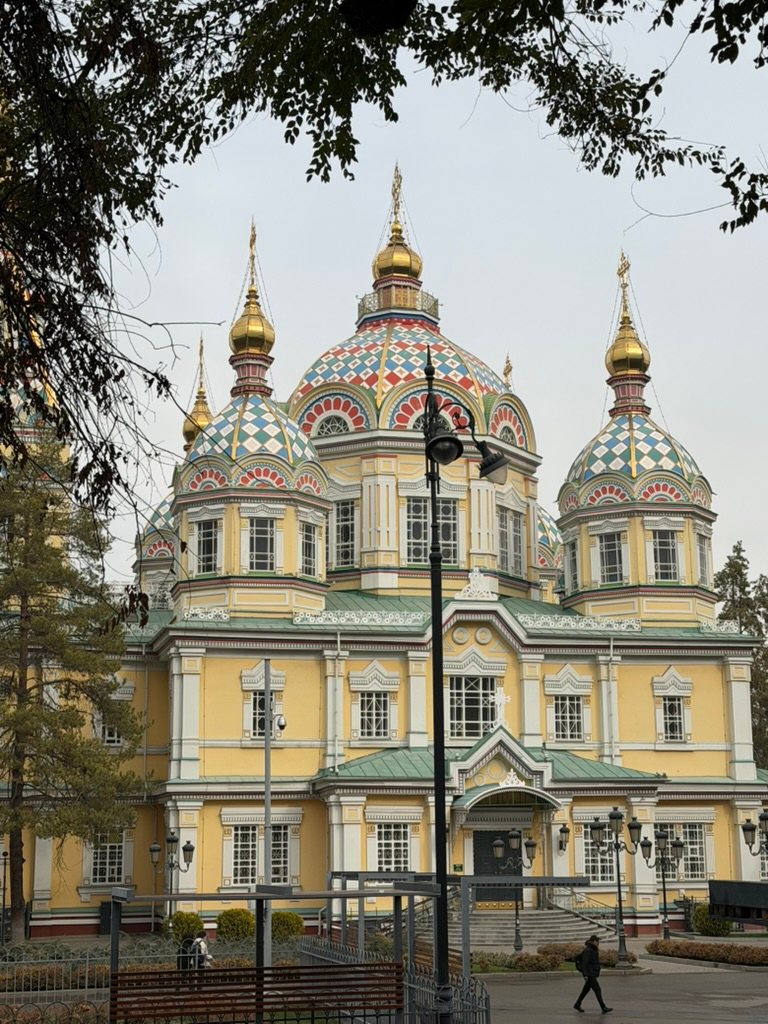
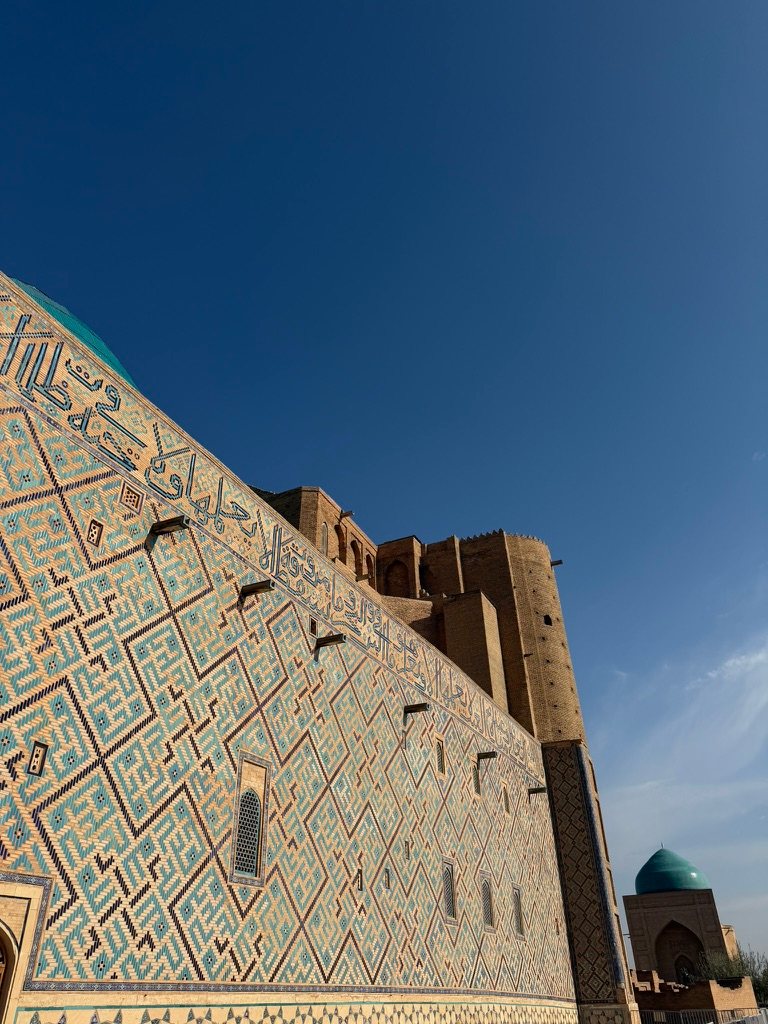
Turkestan is best known for the Mausoleum of Khoja Ahmed Yasawi, an impressive building dating from the fourteenth century. It’s hard to get my head around the fact that it’s more than 600 years old!
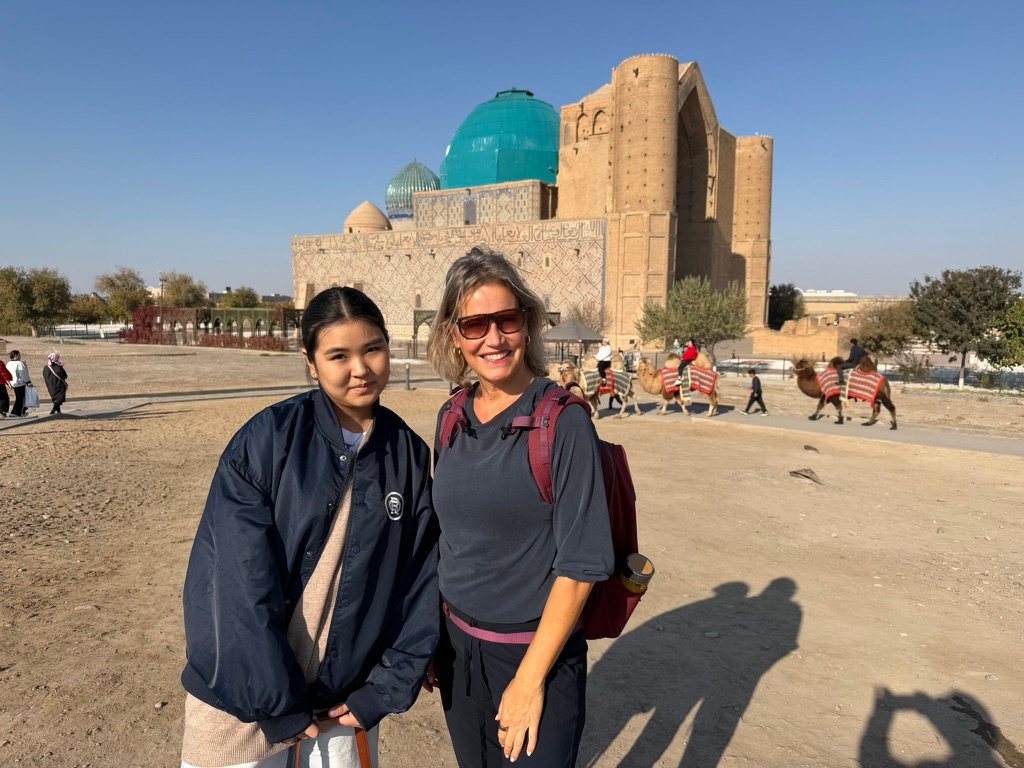
But the experience that moved me most was something I hadn’t expected at all.
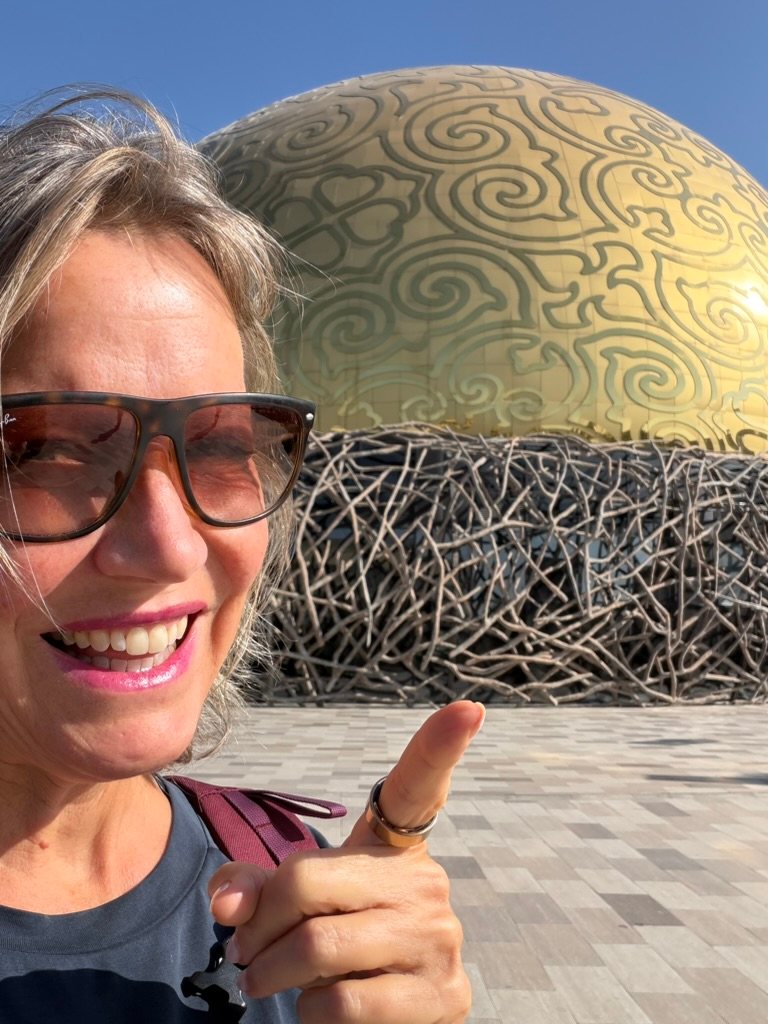
At the modern Caravanserai complex, an enormous Golden Egg houses the Flying Theatre Altyn Samuryq, a 3D theatre. Inside, you take a virtual flight over Kazakhstan, soaring through some of the country’s most beautiful landscapes.
It’s so beautifully done that I really felt as though I was flying. I found it surprisingly moving. In fact, I’m considering going back just to experience it again.
Of all the historic sights and remarkable places I’ve visited here, I never imagined a virtual flight would leave such a lasting impression.
Shymkent: yet another side of Kazakhstan
I take a private taxi from Turkestan to Shymkent for about €20. After grey, Soviet-era Almaty and Turkestan’s almost Disney World atmosphere, this city feels different again. More modern, with little parks, cafés and shops.
My next taxi takes me from Shymkent to Tashkent: roughly two and a half hours for €35, including the border crossing. Private taxis turn out to be surprisingly affordable, and easy to arrange through the Yandex Go app. This is how I eventually continue overland into Uzbekistan, where my journey continues.
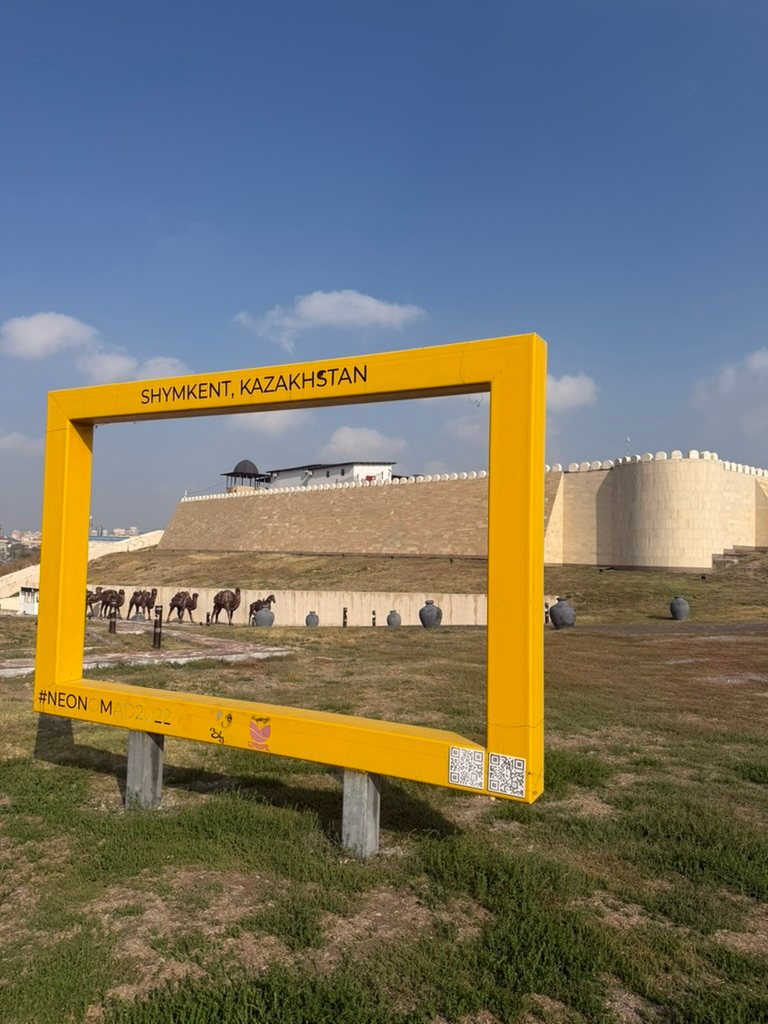
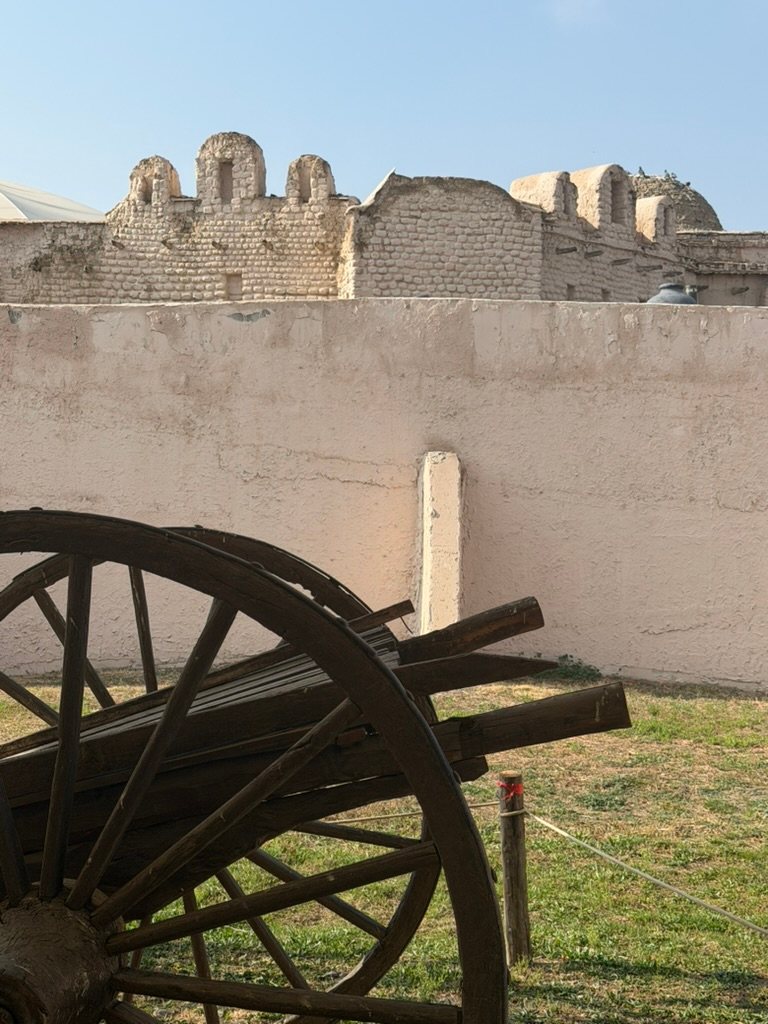
A few other things I noticed in Kazakhstan
In ten days in Kazakhstan, I haven’t met a single Western tourist. I’ve seen visitors from other Central Asian countries and Russia, but not one Western tourist.
Very few people speak English anywhere in the country. Even in more modern Shymkent, almost all the signs are in Russian and Kazakh, so I can’t make much sense of what’s written around me. It sometimes makes travelling more challenging, but it’s also part of what makes the experience so distinctive.
One thing that keeps surprising me is how considerate drivers are at pedestrian crossings. As soon as I get anywhere near one, they hit the brakes to let me cross. Then they wait patiently, without making me feel I need to hurry. They’re almost religious about it. Of all the countries I’ve visited, I’ve never experienced this so consistently. Perhaps this is a kind of hospitality too: quite literally making room for someone.
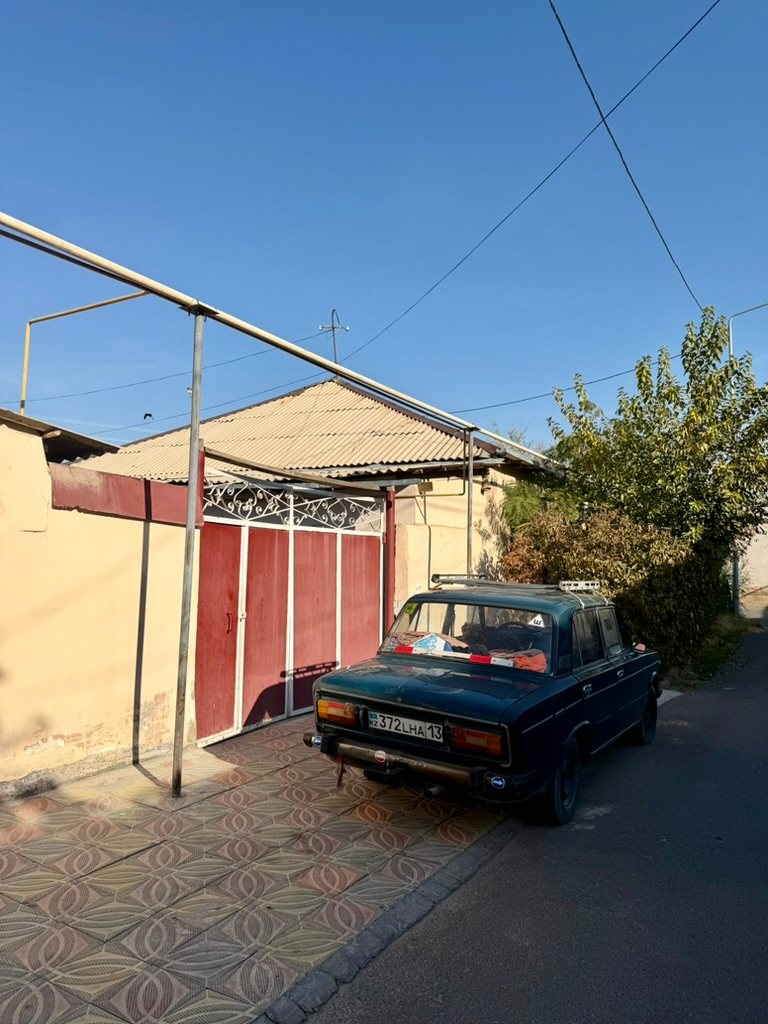
A Lada in Shymkent.
November, with thermal layers in my suitcase
I visited Kazakhstan in November, when it would normally already be cold. I’d packed thermal layers, but during my trip the daytime temperature sometimes reached 20°C, with sunshine. Very unusual, people told me. It was already below freezing in Astana, they said, while the places I visited were still pleasantly warm.
The nights were cold, though. In the end, I bought a windbreaker for €20 so I could stay warm in the evenings too.
Why am I here, anyway?
I keep wondering why I’ve ended up here. After all, none of this was planned.
I believe the world around us often reflects something that’s happening within us. And the lack of vitality I often sense in former Soviet countries, the greyness, the guarded faces, the absence of visible joy, gives me something to think about.
Perhaps it’s an invitation to let more of my own energy flow again. More fun, playfulness and spontaneity. More enjoyment, without everything having to serve a purpose.
I thought I simply needed to change my travel plans. Along the way, though, I’m discovering more and more about this country’s history, about human connection, and perhaps about myself.