Uzbekistan (2026), Warm hospitality, spectacular mountains and surprises around every corner
I had picked Uzbekistan almost at random as the destination for an adventure with my friend Victor, a fellow entrepreneur. The idea was to plan as little as possible, travel without a fixed itinerary and simply see where life took us. We even came up with a set of adventure rules to challenge ourselves along the way. You can read what happened in my separate adventure blog.
But adventure found me before my week with Victor had even begun. I was supposed to fly straight from a conference in Bangkok to Uzbekistan, but things didn’t quite go according to plan, and I accidentally ended up in Kazakhstan first. From there, I travelled overland to Tashkent, Uzbekistan’s capital.
Uzbekistan had never been particularly high on my list of countries to visit. But having been there, I honestly wonder why. What a surprisingly wonderful country! Beautiful metro stations, delicious food, spectacular mountains, incredibly friendly people and prices that seem almost too good to be true. Above all, it’s a country where you feel genuinely welcome.
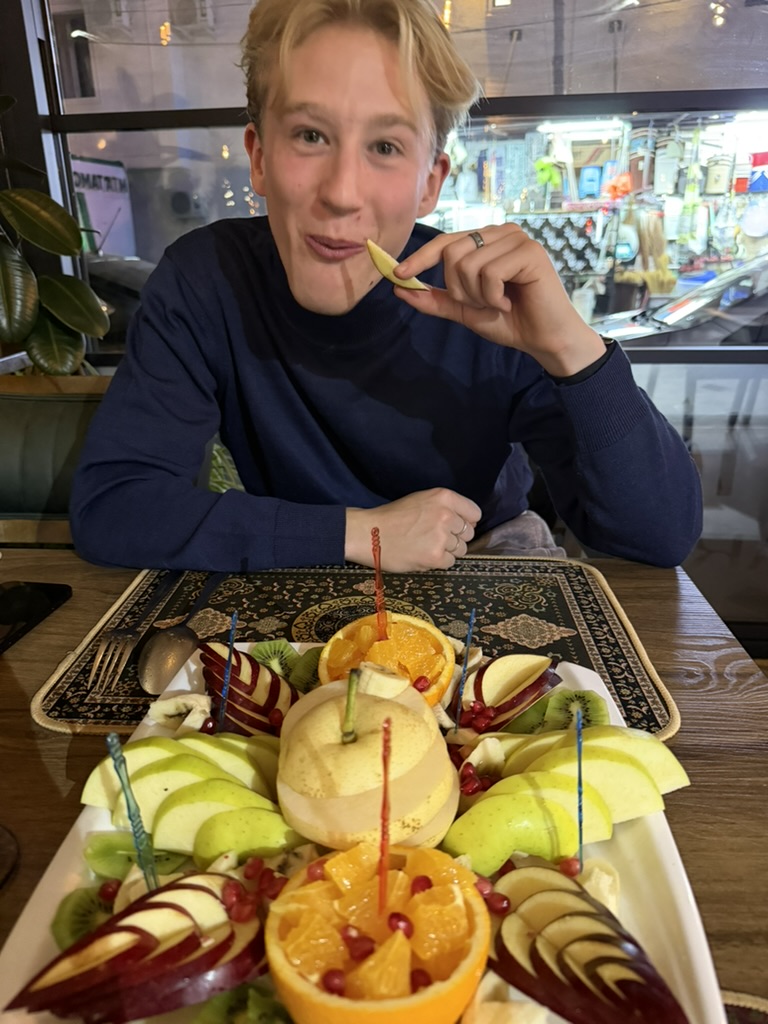
Far less Russian than I expected
Uzbekistan was part of the Soviet Union until 1991. You can still see traces of that history everywhere, but the country feels quite different from Kazakhstan. Less Russian, more distinctly Central Asian.
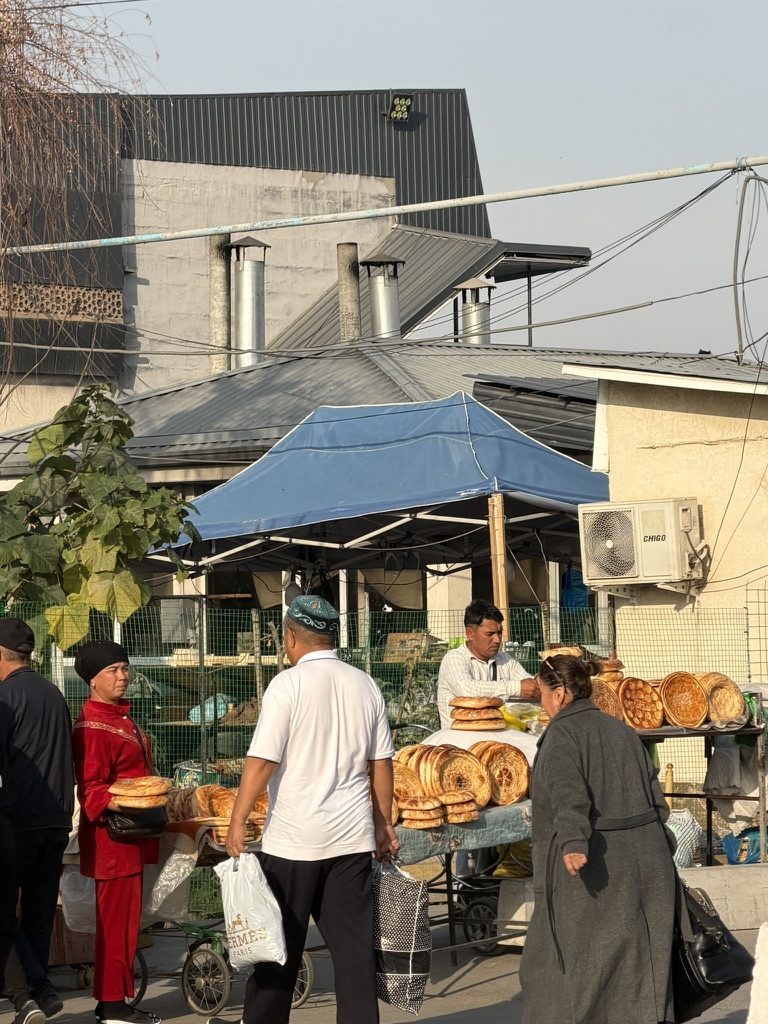
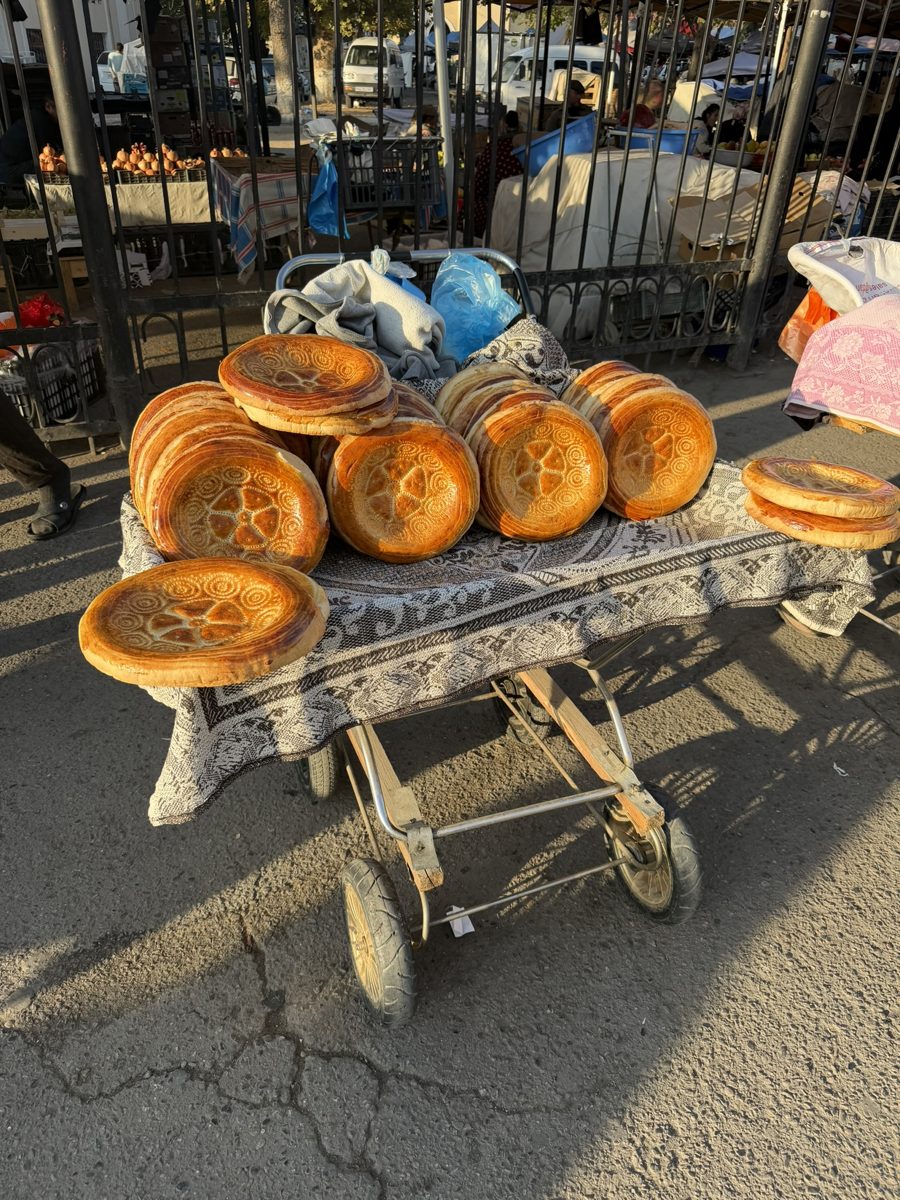
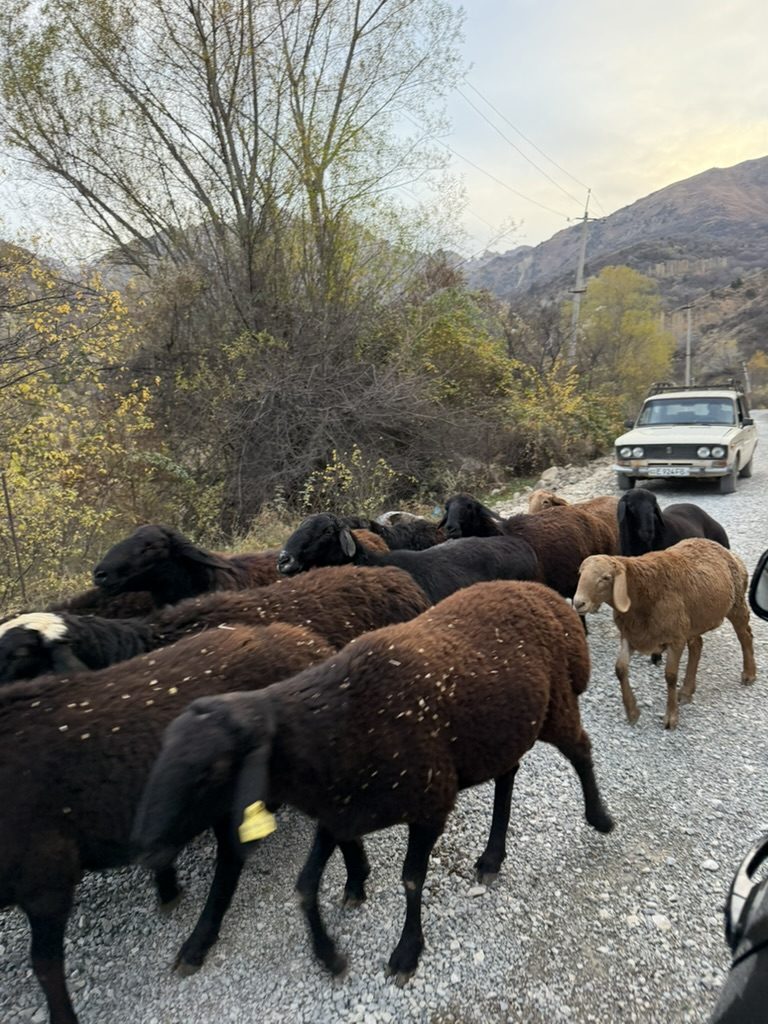
There are still plenty of old Ladas on the roads, especially outside the cities, but the streets have a character all their own. One of the first things that caught my eye was the beautiful round bread being sold everywhere, often from little carts or even baby strollers.
You’ll hear Russian spoken, but also lots of Uzbek and other languages. Sometimes it’s hard to tell which language people are speaking. Uzbek actually sounds quite similar to Turkish, which makes sense since both belong to the Turkic language family. Another thing I noticed in Tashkent was how many signs use the Latin alphabet rather than Russian Cyrillic.
Uzbekistan has a strong identity of its own, shaped by Central Asian traditions, Islamic influences and its Soviet past.
A country where you feel remarkably safe
Another thing that struck me was how safe Uzbekistan felt. I could leave my bag or laptop somewhere, put my phone down and not worry about it. Even walking around alone as a woman, including in the evening, felt completely comfortable.
I asked some locals why that was. They pointed to upbringing, mentality, culture and religion. The population is predominantly Muslim, and according to the people I spoke to, respect for others is deeply ingrained in society. Some even told me there is virtually no crime.
Riding through underground palaces for 20 cents
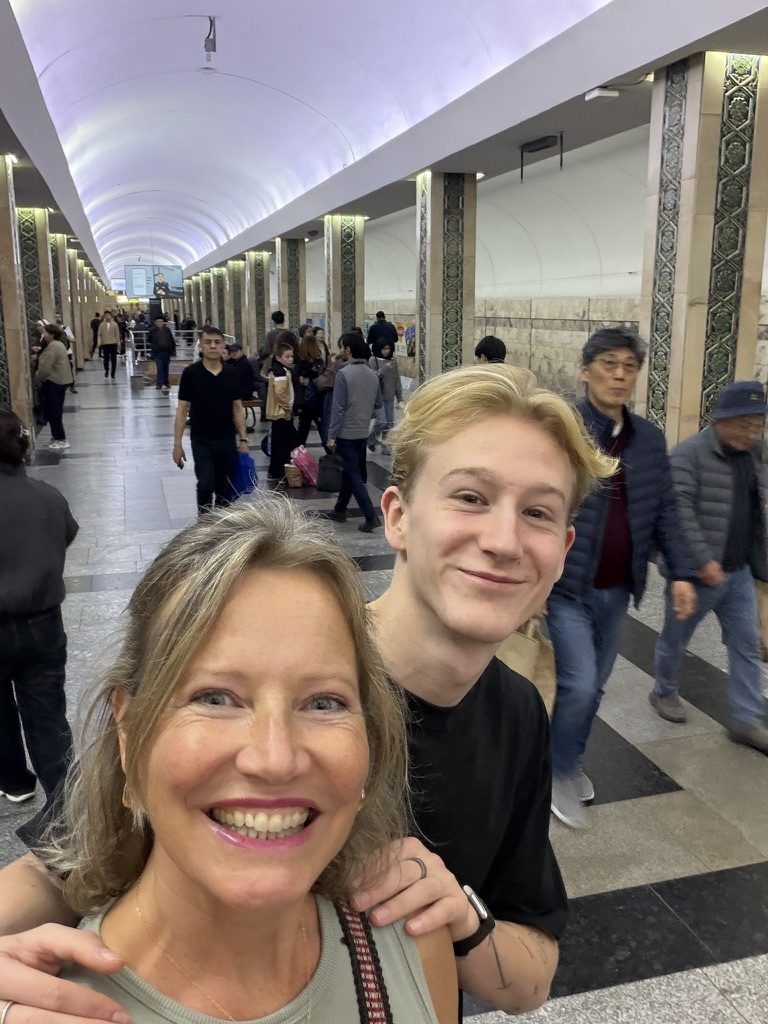
On our first day, Victor and I wandered around Tashkent before taking the metro to Chorsu Bazaar. What a discovery!
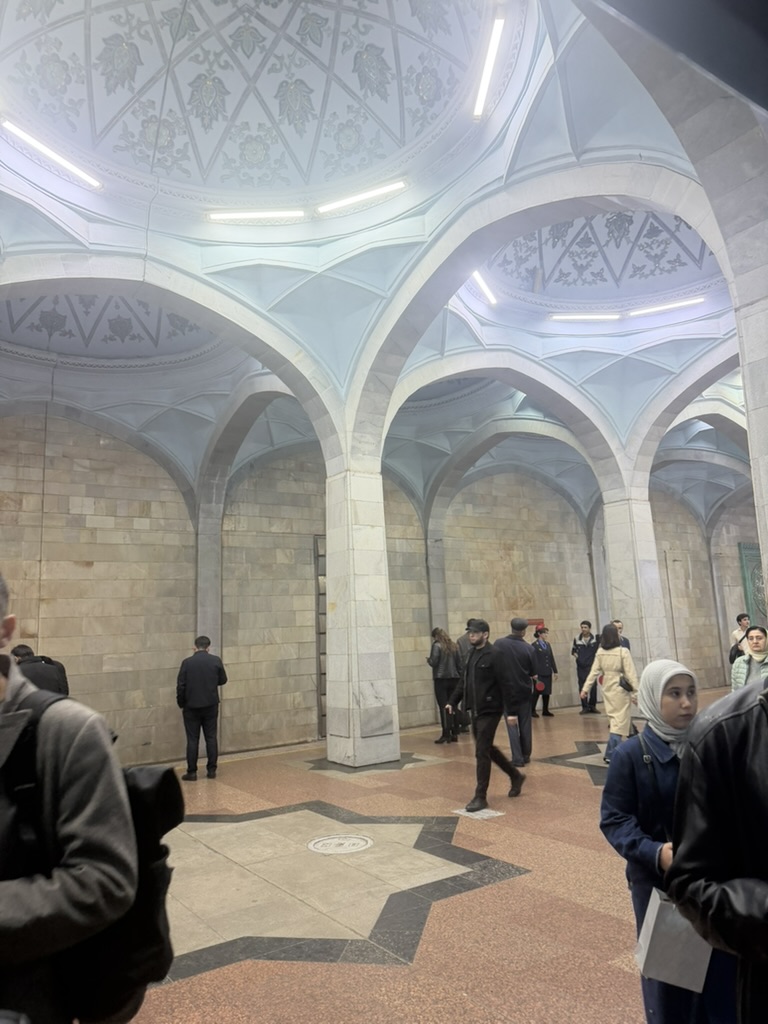
Tashkent’s metro stations are absolutely beautiful. Some have impressive chandeliers, others feature elaborate mosaics, grand columns or intricately decorated ceilings. At times, you feel as though you’re walking through a palace or museum rather than a subway station.
And the best part? A ride costs around 20 euro cents. You can travel across the entire city for next to nothing, admiring one spectacular station after another.
Chorsu Bazaar, a feast for the senses
Chorsu Bazaar is a huge, bustling market filled with narrow lanes and stalls selling just about everything imaginable. Fresh produce, spices, meat, bread, dried fruit and all kinds of local specialties. Food is being prepared and sold everywhere.
An elderly woman in traditional clothing was pushing a baby stroller loaded with homemade food. I picked a flat, square, crispy pastry filled with spinach. Delicious! As I walked along enjoying my snack, we passed a fishmonger with enormous live fish. One of them was suddenly killed with a blow to the head. Oops! Not exactly what I wanted to see while happily munching away!
At another stall, I spotted little packages of grape leaves. I assumed they were dolma, grape leaves stuffed with rice and meat, so I bought one. But when we opened it, there was no filling at all. Just the leaves, ready to be used for making dolma. Strangely enough, they were delicious on their own, apparently cooked in some kind of broth.
At a tiny food stall, we had wonderful plov, Uzbekistan’s traditional rice dish with meat and carrots. A man was chopping a thick slice of fatty mutton into small strips and piling them onto the rice. Our meal came with a salad and, of course, tea. We didn’t even have to pay until we’d finished eating. The whole meal cost us around €3.50.
One-euro meals and tea with everything
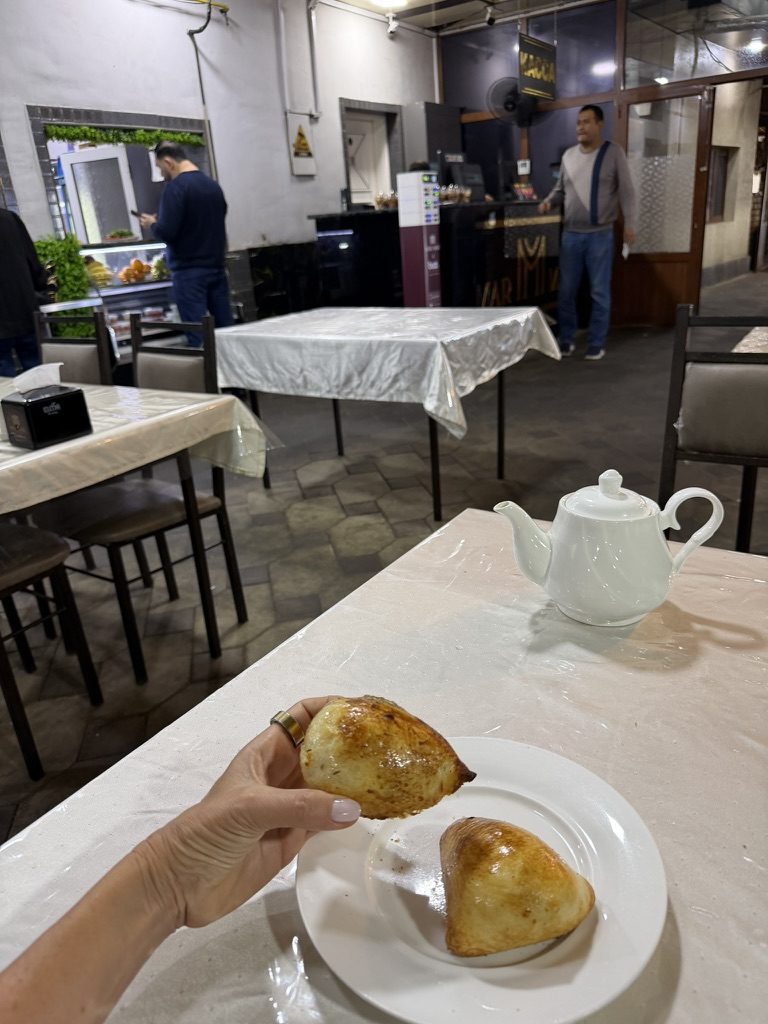
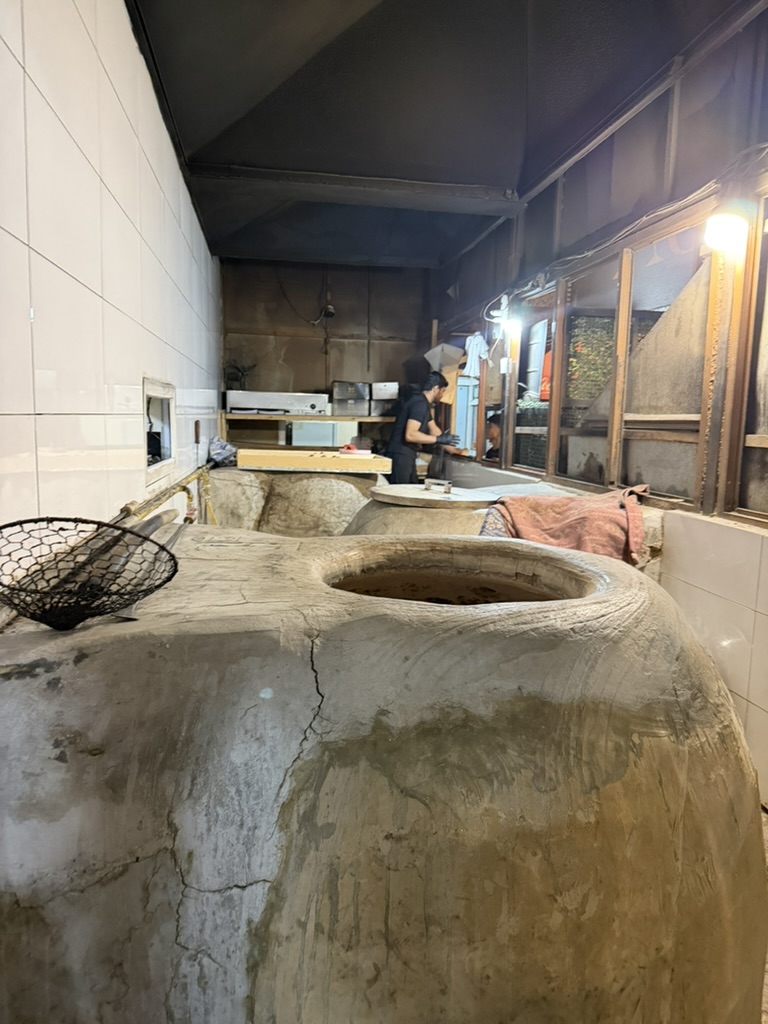
You certainly won’t go hungry in Uzbekistan. Food is everywhere. You’ll find somsa, delicious stuffed pastries baked in traditional clay ovens, shashlik, grilled meat skewers, and kurt, small, rock-hard balls of dried, salty dairy. Markets, roadside stalls and little eateries are constantly preparing fresh food.
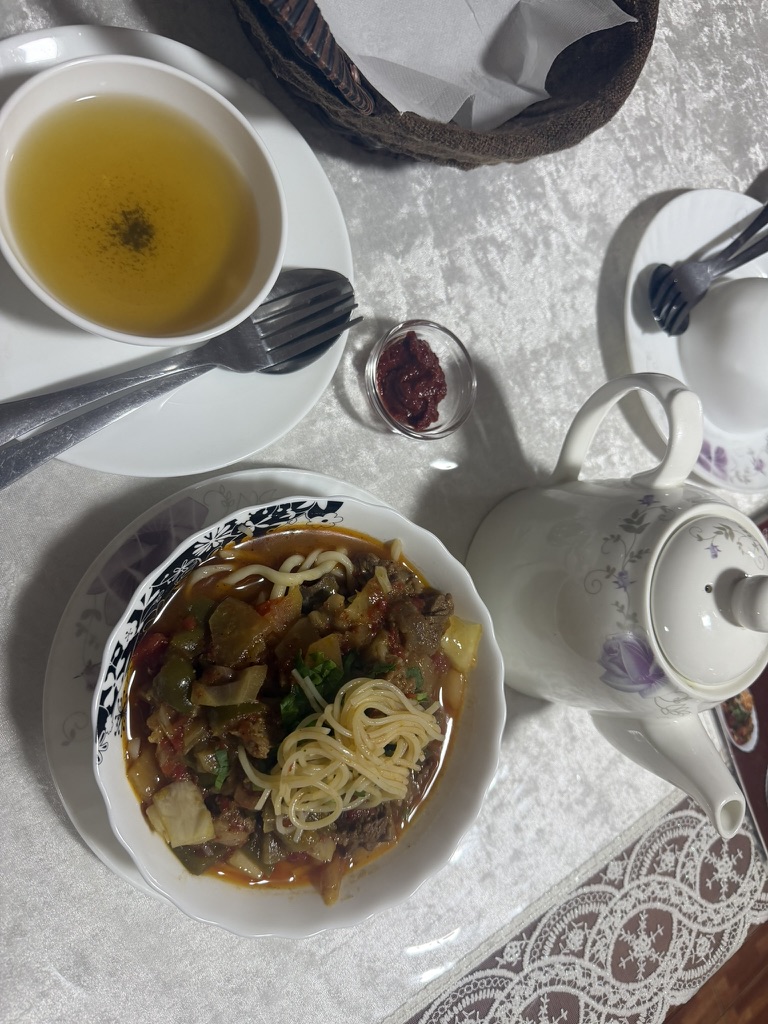
And then there’s the tea. Everyone drinks tea, all day long, everywhere. Black or green tea, usually made with loose leaves, sometimes flavoured with mint, cardamom or fruit such as orange and dried strawberries. Honey or generous amounts of sugar are often added, making some varieties incredibly sweet.
Tea isn’t just something people drink. It’s something they offer you wherever you go. It’s an essential part of the local hospitality.
How cheap is Uzbekistan?
One of the biggest surprises was just how affordable everything is. You can find a perfectly decent hotel room with a private bathroom for around $30 to $40 a night. A simple local meal can cost as little as €1, and a metro ride across Tashkent is about €0.20. Even our generous serving of plov, salad and tea came to just €3.50.
This makes Uzbekistan an attractive destination for travellers who want to stay a little longer, especially if you don’t need luxury.
As a digital nomad, though, I’d recommend checking the internet connection at your accommodation before booking. Reliable Wi-Fi isn’t always a given, particularly outside the major cities. As we were about to discover for ourselves.
Into the mountains, a completely different world
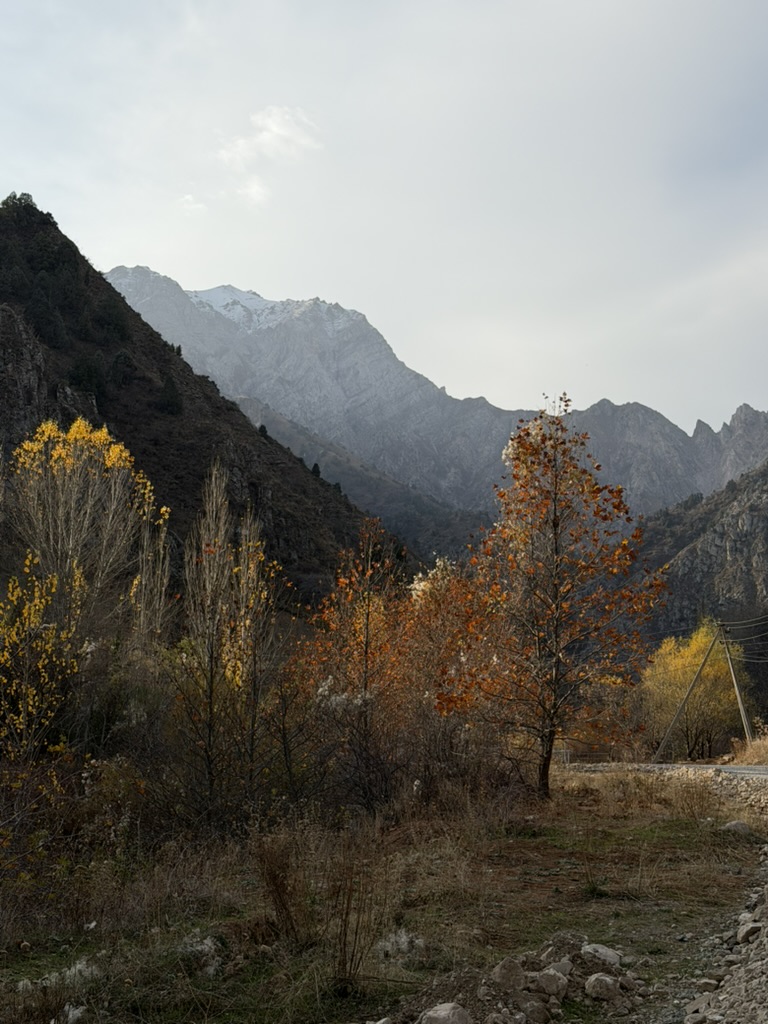
It’s surprisingly easy to escape into the mountains from Tashkent. Amirsoy, Chimgan and Charvak Lake are all roughly an hour and a half to two hours away. We booked a private guide through GetYourGuide to explore the area.
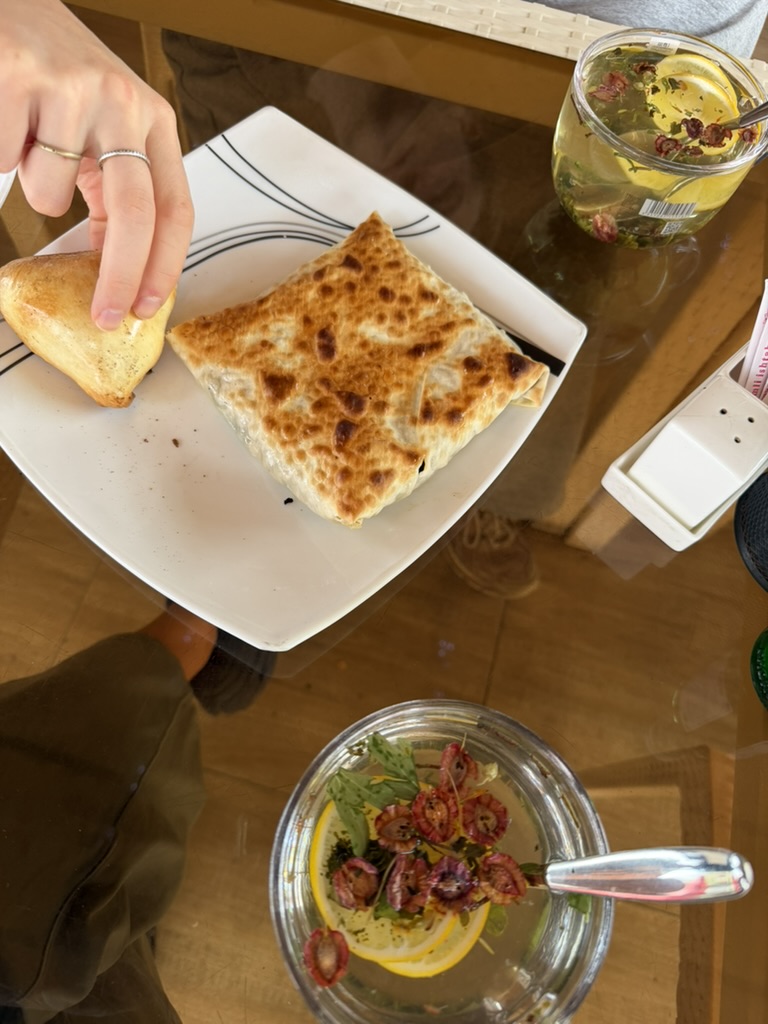
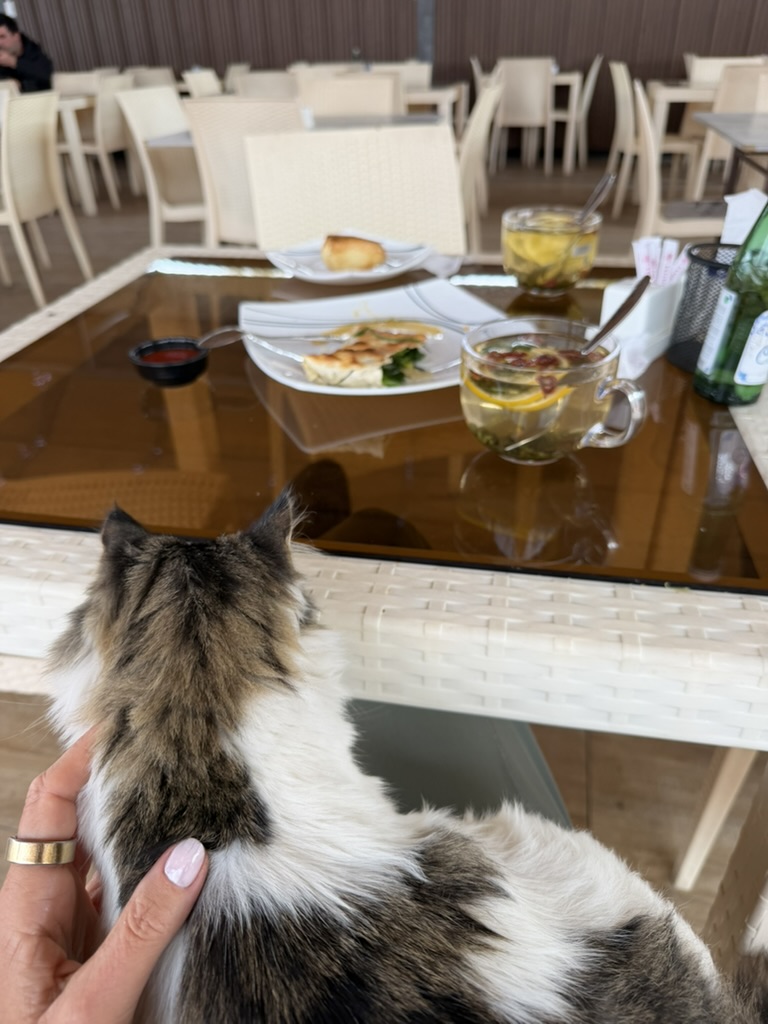
Along the way, our guide suggested stopping at a place famous among locals for its somsa. It was Sunday, and the parking lot was packed with cars belonging to Uzbek families on their way to the mountains. Not a tourist in sight. We enjoyed some delicious somsa and were joined by a friendly cat who made itself comfortable on our laps.
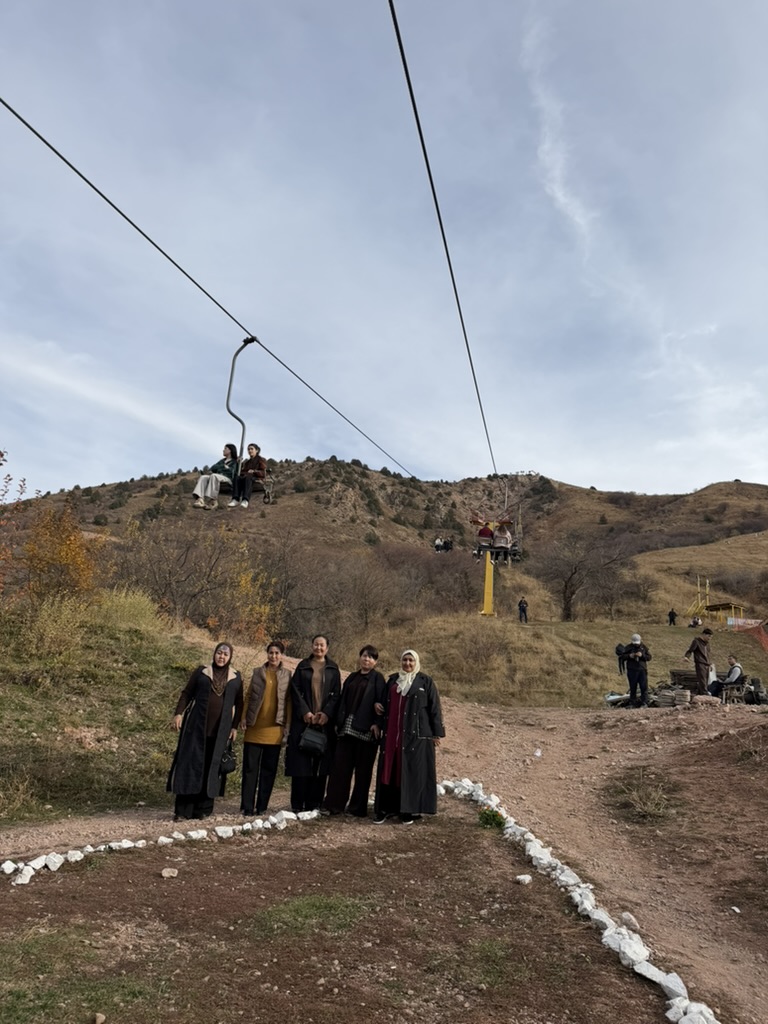
What really struck us was how many local people head into the mountains on weekends. Entire families with children, but also plenty of elderly people in traditional clothing and women wearing headscarves. They hike, take photos, share food and enjoy being outdoors together. It’s clearly a favourite weekend activity for people of all ages.
Along the mountain roads, we passed people selling fresh strawberries and spotted an impressive number of old Ladas.
Spectacular views from the Amirsoy gondola
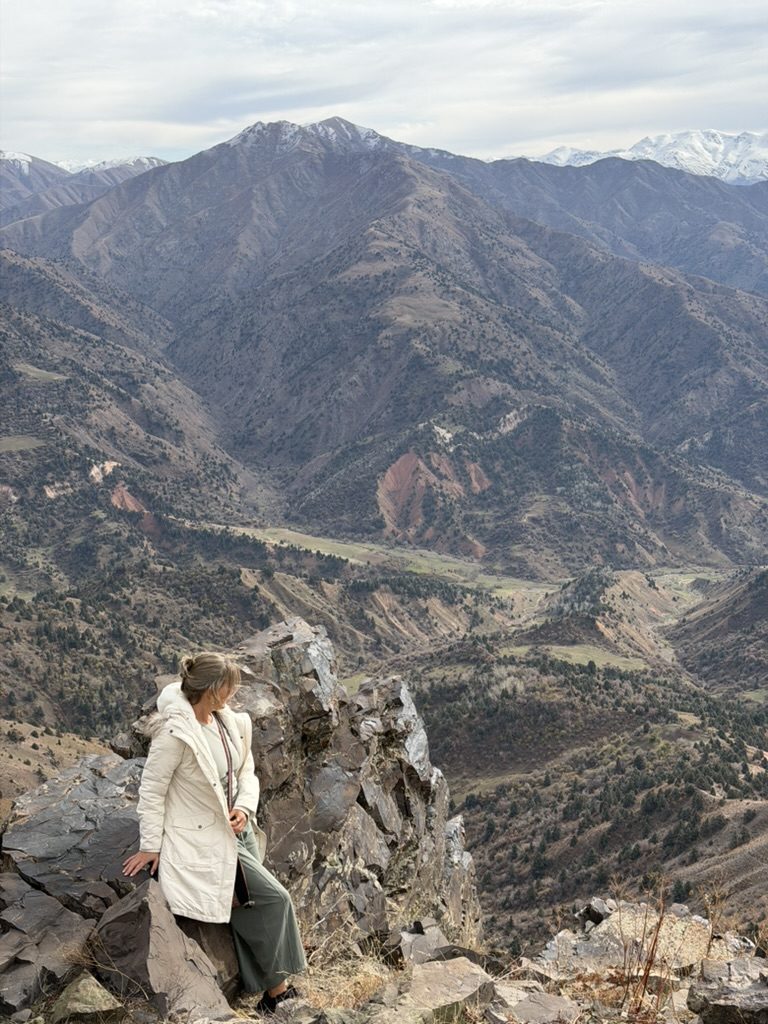
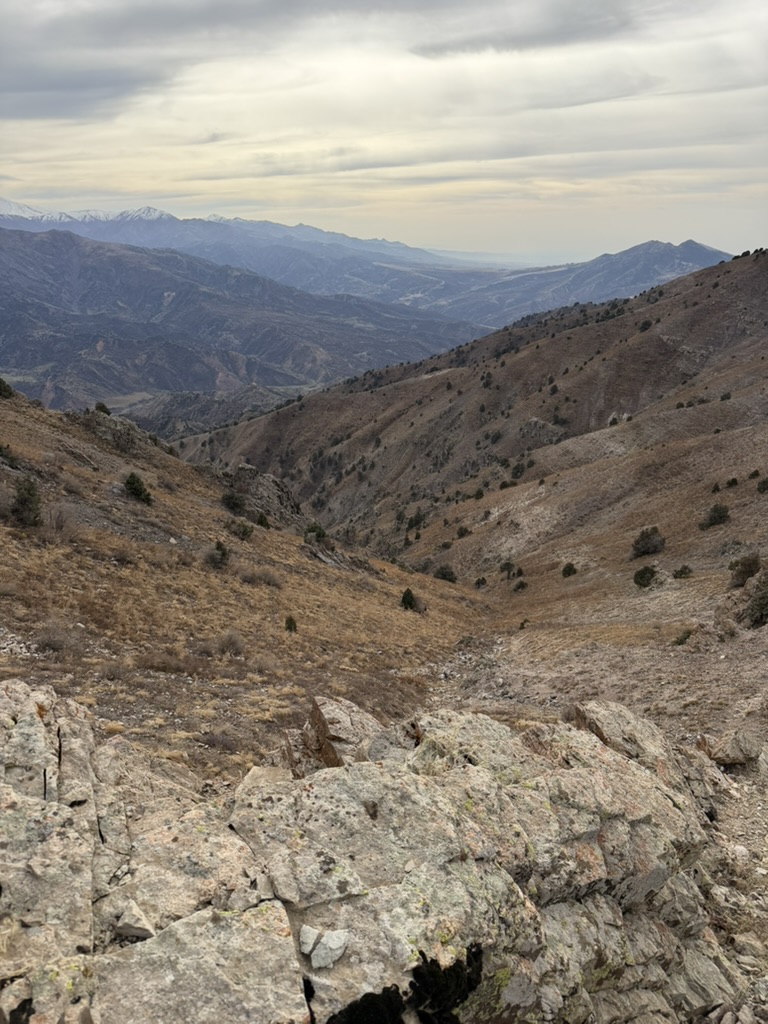
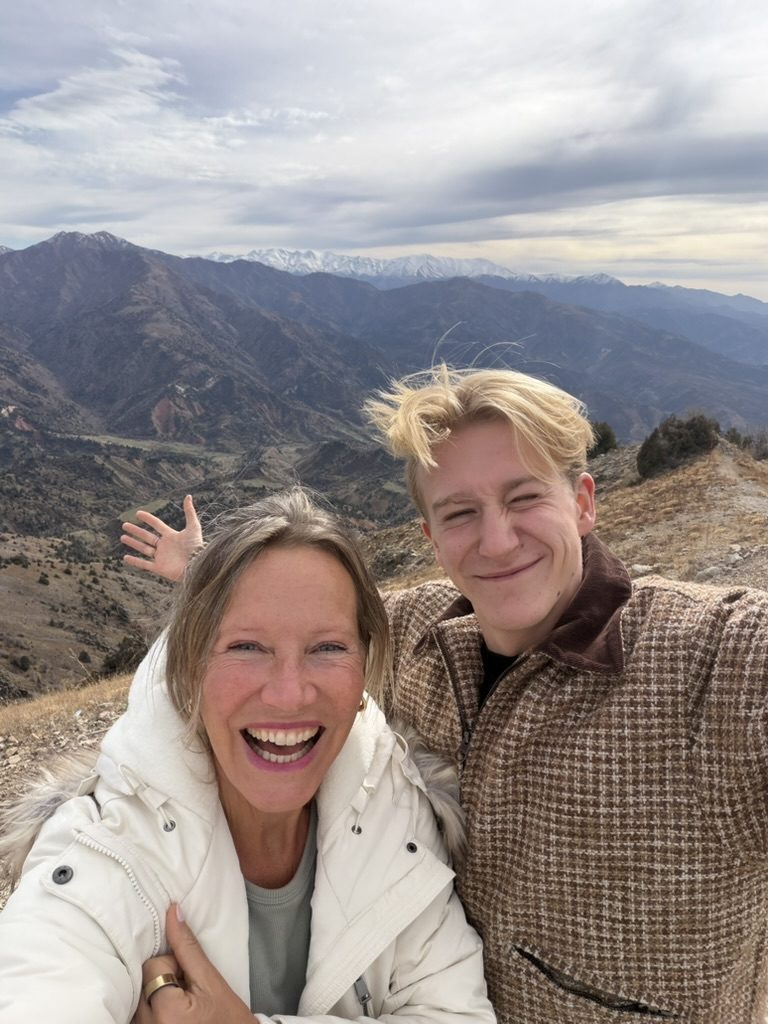
At Amirsoy Mountain Resort, we took a modern gondola high into the mountains. The views were spectacular, with mountain peaks, deep valleys and vast landscapes stretching out in every direction.
At the top, we even had someone film us dancing to spiritual music with the mountains as our backdrop. We also went for a walk that turned out to be much steeper than expected. In places, it felt more like climbing than hiking. By the time we made it back up, we were completely exhausted. But the scenery was worth it.
A chairlift straight out of the 1970s
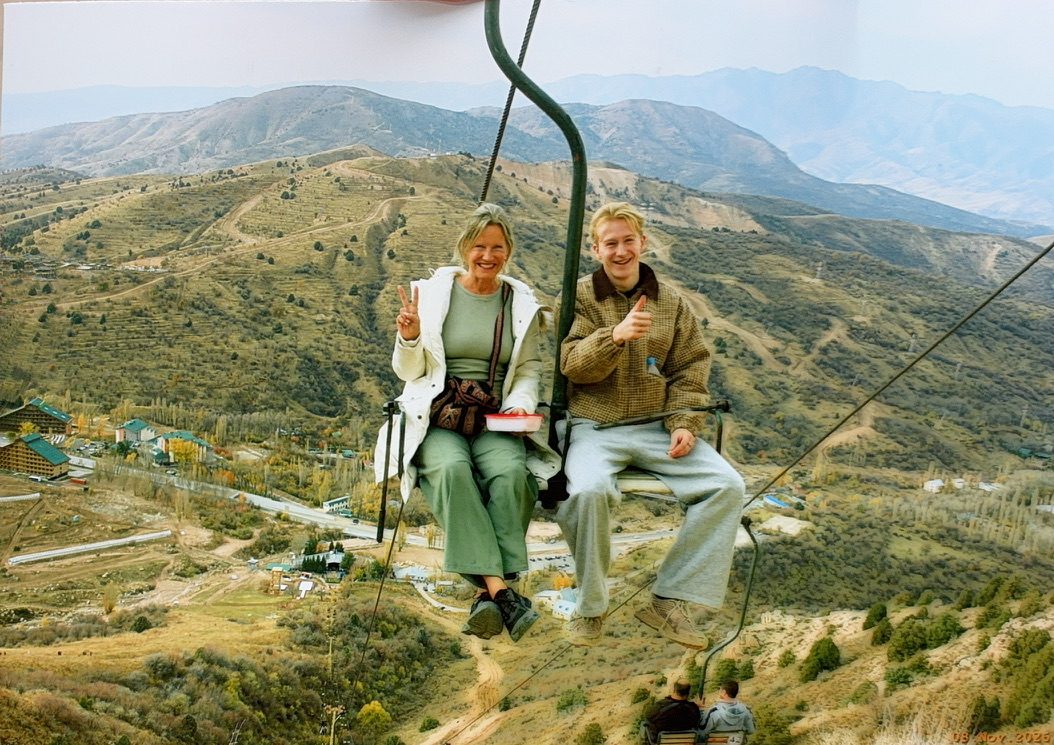
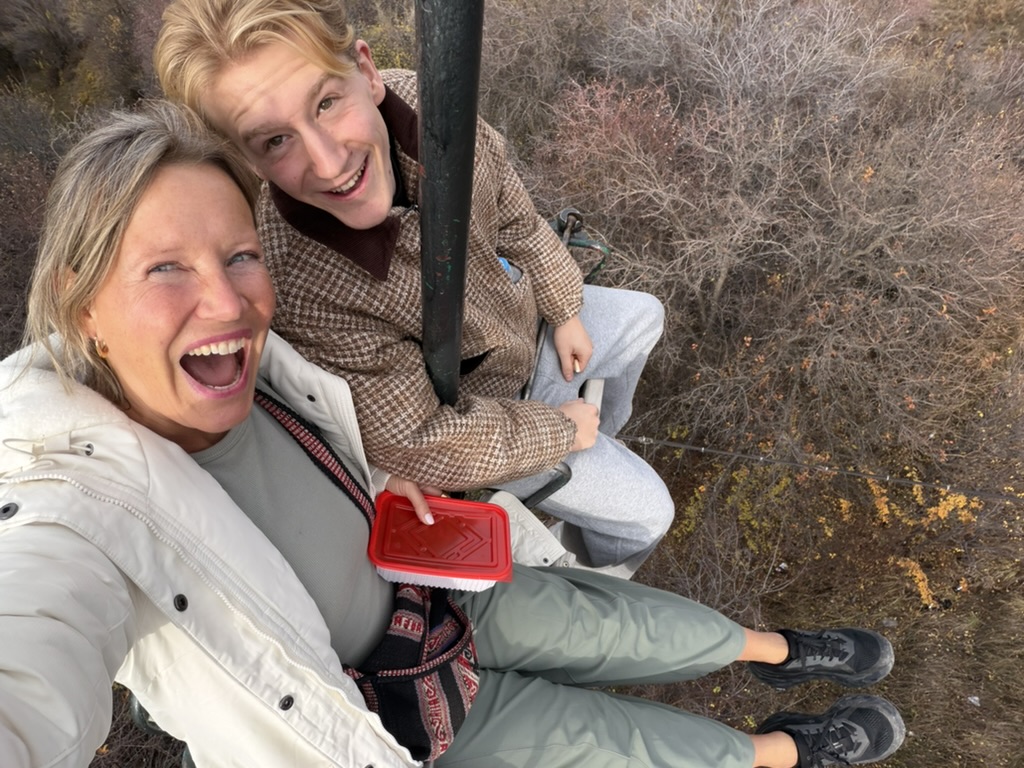
Not far from Amirsoy is Chimgan, where you can ride a very different kind of lift. Forget modern enclosed gondolas. This is an old-fashioned, open-air chairlift.
Earlier that day, I’d been telling Victor about the ski lifts I remembered from childhood. Back in the 1970s, when I went skiing with my parents, you simply sat on an open chair with a little chain across the front. Hardly any safety features at all.
And then, just a few hours later, there we were, staring at exactly that kind of chairlift!
Victor was terrified. Absolutely terrified. But he got on anyway. Afterwards, he told me it had been one of the highlights of our entire trip.
For me, it was a wonderful trip down memory lane, as if I’d been transported straight back to my childhood.
A luxury hotel in the middle of nowhere
By the end of the day, we’d fallen so much in love with the mountains that we decided not to return to Tashkent. We told our guide he could head back to the city without us and booked a hotel on the spot.
Gulkam Resort turned out to be at the very end of a road, completely isolated in the mountains. A beautiful, modern hotel with a spa, sauna and gym. The only catch was that it was almost empty. As a result, much of the menu wasn’t available. And there was no working internet.
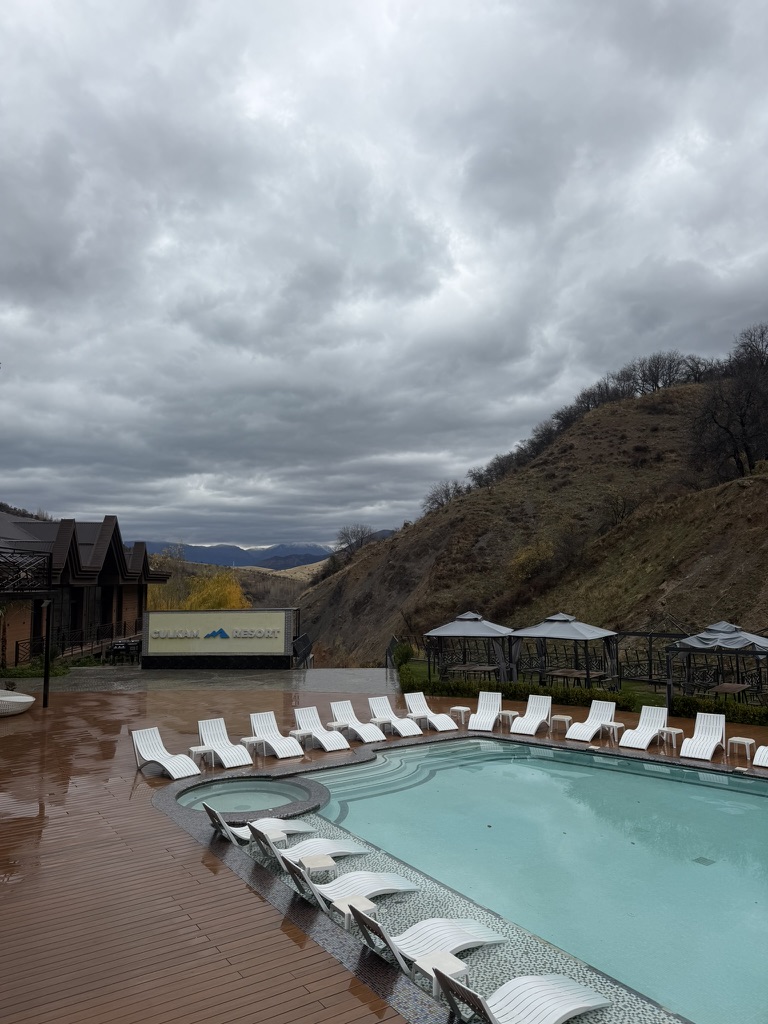
For me, as a digital nomad, that took some getting used to. I couldn’t work, look anything up, make payments or even easily extend our stay. But the staff were incredibly kind. There were cats wandering around, a little puppy and people who couldn’t do enough for us.
Hospitality was one of the things that impressed me most throughout Uzbekistan. People spontaneously offer you tea, food or cigarettes and often go far beyond what you’d expect. Perhaps some of this generosity is rooted in Central Asia’s nomadic traditions, where welcoming travellers, sharing food and helping strangers have been important for centuries. In the old days, hospitality could literally be a matter of survival.
At one hotel, Victor asked the receptionist where we could go for a nice walk. Instead of simply giving directions, the man replied, "Give me ten minutes and I’ll come with you."
At our mountain hotel, the reception staff stood up every single time we walked past. Not just when we checked in, but every time. There was one employee who spoke English and helped us with everything. Whenever he explained something, offered to help or arranged anything for us, he placed his hand over his heart. Such a small gesture, but it made everything feel incredibly sincere.
The birthday cake that didn’t exist
Because the hotel had so few guests, most of the dishes on the menu weren’t available. They couldn’t even make a dessert, just when I was desperately craving a piece of cake!
That evening, the only other guests in the restaurant were a Russian family celebrating a birthday. To our surprise, two of the children suddenly came over to our table and offered us two beautiful slices of cake, covered in chocolate and nuts.
In a place where there was no cake to be had, cake somehow came to us.
Quite literally, the icing on the cake of our mountain adventure.
Hazrati Imam, impressive but not my highlight
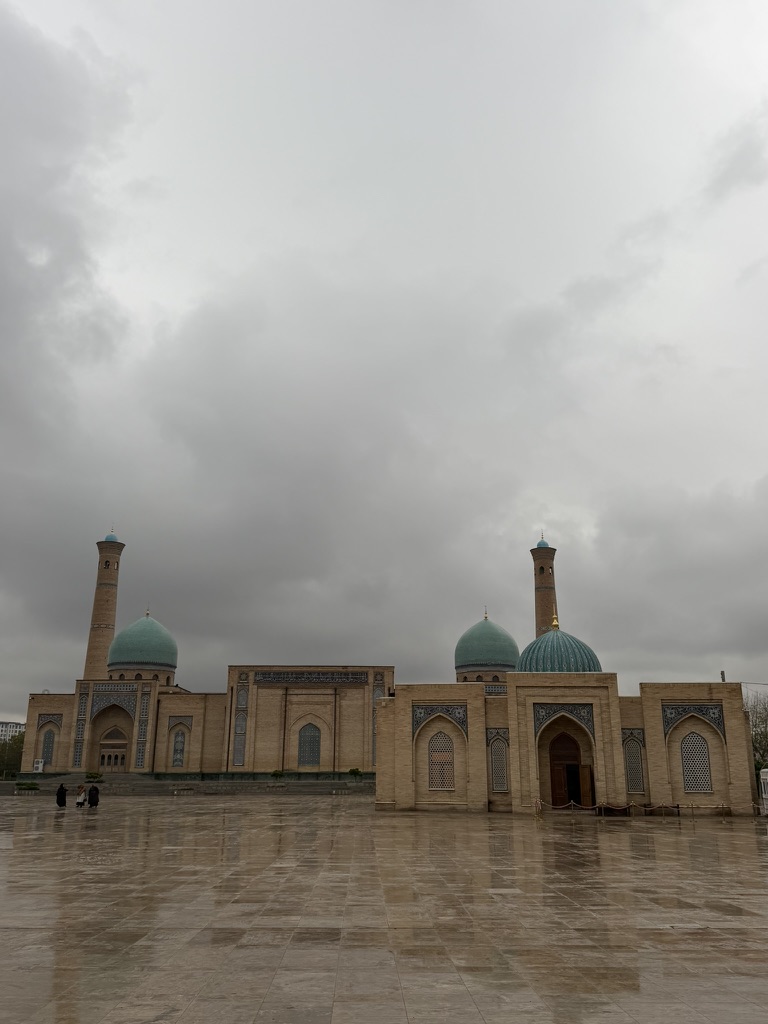
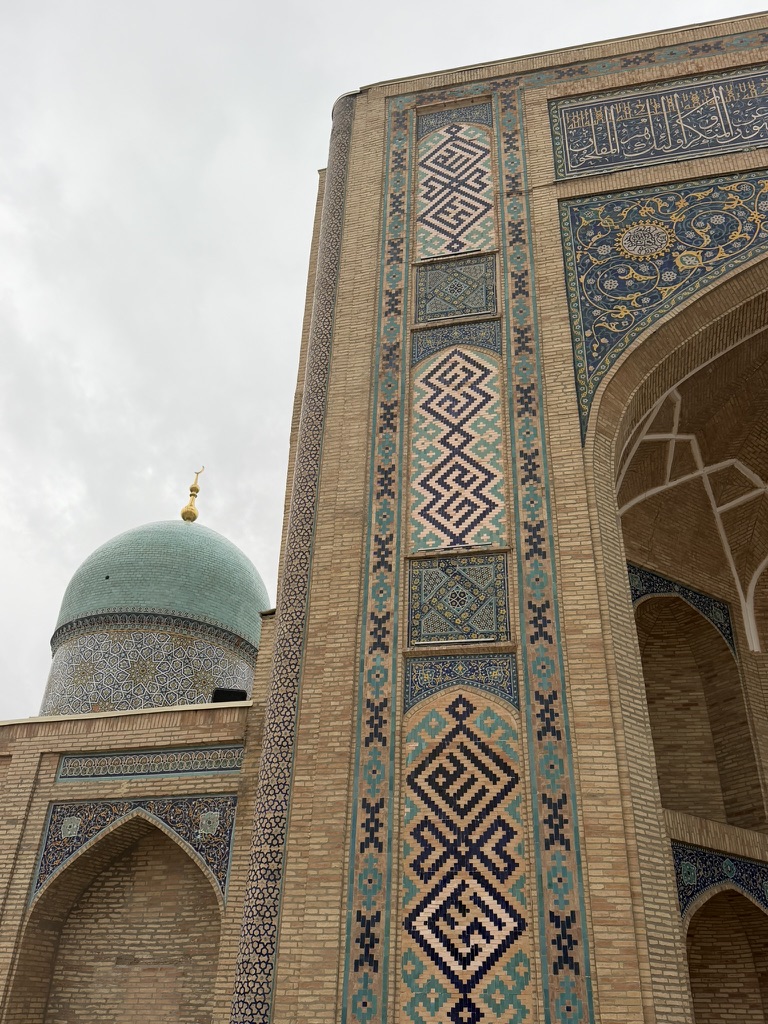
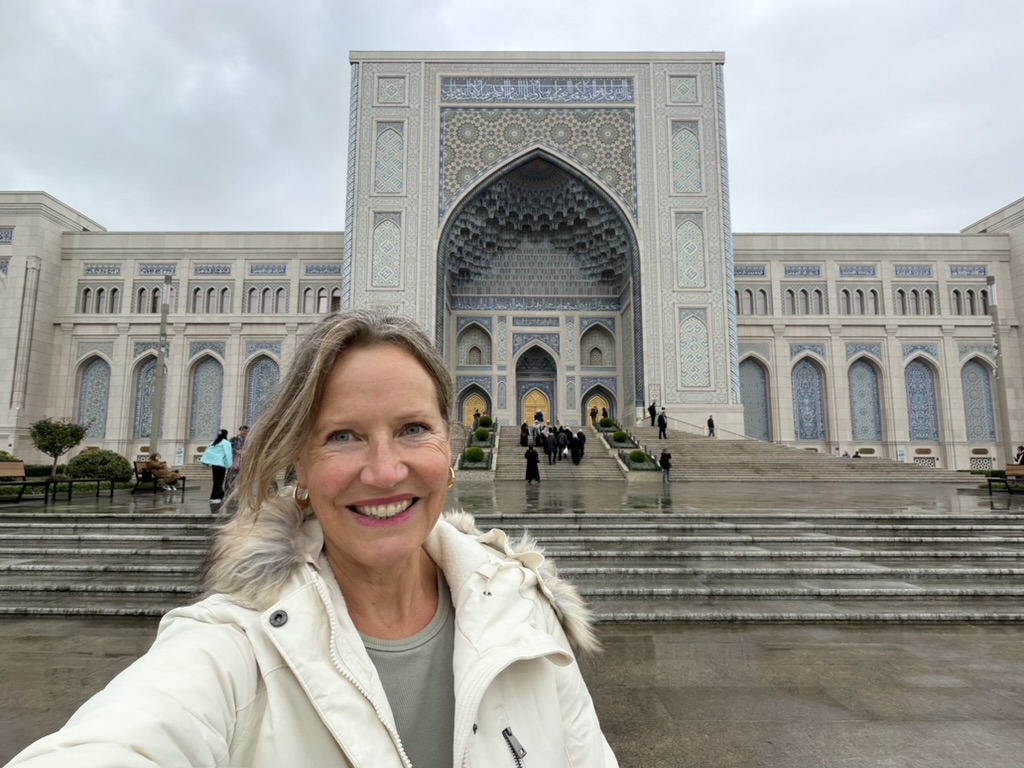
On my last afternoon in Tashkent, after Victor had already left, I went to the Hazrati Imam complex in the rain. I didn’t want to miss this impressive religious complex, with its beautiful blue mosaics, domes and Islamic architecture.
Perhaps it was the grey, rainy weather. Perhaps I’d already seen so many historic sights during my travels through Kazakhstan. Or perhaps our mountain adventure had made such an impression that it was hard to beat.
Either way, this wasn’t the highlight of Uzbekistan for me, although other travellers tell me they consider it one of the most beautiful places. Everyone has different tastes, of course. I’m glad I went, but for me the highlights of Uzbekistan were mostly the people, the mountains and the unexpected encounters.