

Why should I say I used AI? I don’t mention that I used Word either
More and more articles now carry a “Made with AI” label. And more and more people ask: “Should we be required to disclose that?” My answer is: sometimes. But usually not.

That may sound strange coming from someone who works with AI every day. Still, I think we are having the wrong discussion.
Nobody adds a note below an article saying: written in Microsoft Word. Nobody mentions that the spelling was checked, a colleague helped shape the ideas or an intern did the research. When a communications agency writes your social media posts, you don’t add: created by an agency. So why should AI suddenly be different? I think we are mixing up two completely different things.
Keeping control and taking responsibility
I use AI to turn my spoken words into written text, bring structure to my ideas, sharpen a title or make a sentence flow a little better. But I choose the subject. The arguments are mine. The examples are mine. The conclusion is mine. And if there is a mistake, I am the one who should be held accountable.
AI is simply a tool. Just like Word, Photoshop, Excel or Google.
It becomes a very different story when you ask AI to write an article about a subject you barely understand yourself. Then you can’t judge whether the content is correct. You don’t know whether the examples make sense, whether the conclusions are logical or whether the text contains complete nonsense.
The difference between a tool and an author
In that case, I would disclose it. The reader should know whether they are reading the knowledge of an expert or the output of a clever language model.
That is where I draw the line. The real question is not whether AI was used. It is who is responsible for the content.
Who made the choices? Who checked the facts? Who added nuance? Who can explain why every paragraph is there? And who is willing to put their name to it if a mistake comes to light later?
To me, that is the real definition of authorship.
Responsibility for what you publish
AI is changing the way we work. It does not change who is responsible for what gets published.
Maybe we should stop asking: “Was this made with AI?” and start asking the only question that really matters: does the person whose name is on it actually know what they are talking about?
PS. For the sake of transparency, this column was written WITH THE HELP OF AI. I recorded my ideas and AI helped me structure them and sharpen a few phrases. The idea, the arguments, the examples and the final edit are all mine. Which is exactly what this column is about.
This column was originally published in Dutch on 24 July 2026 by Intermediair.nl. Check out all of Esther’s monthly columns with AI tips.
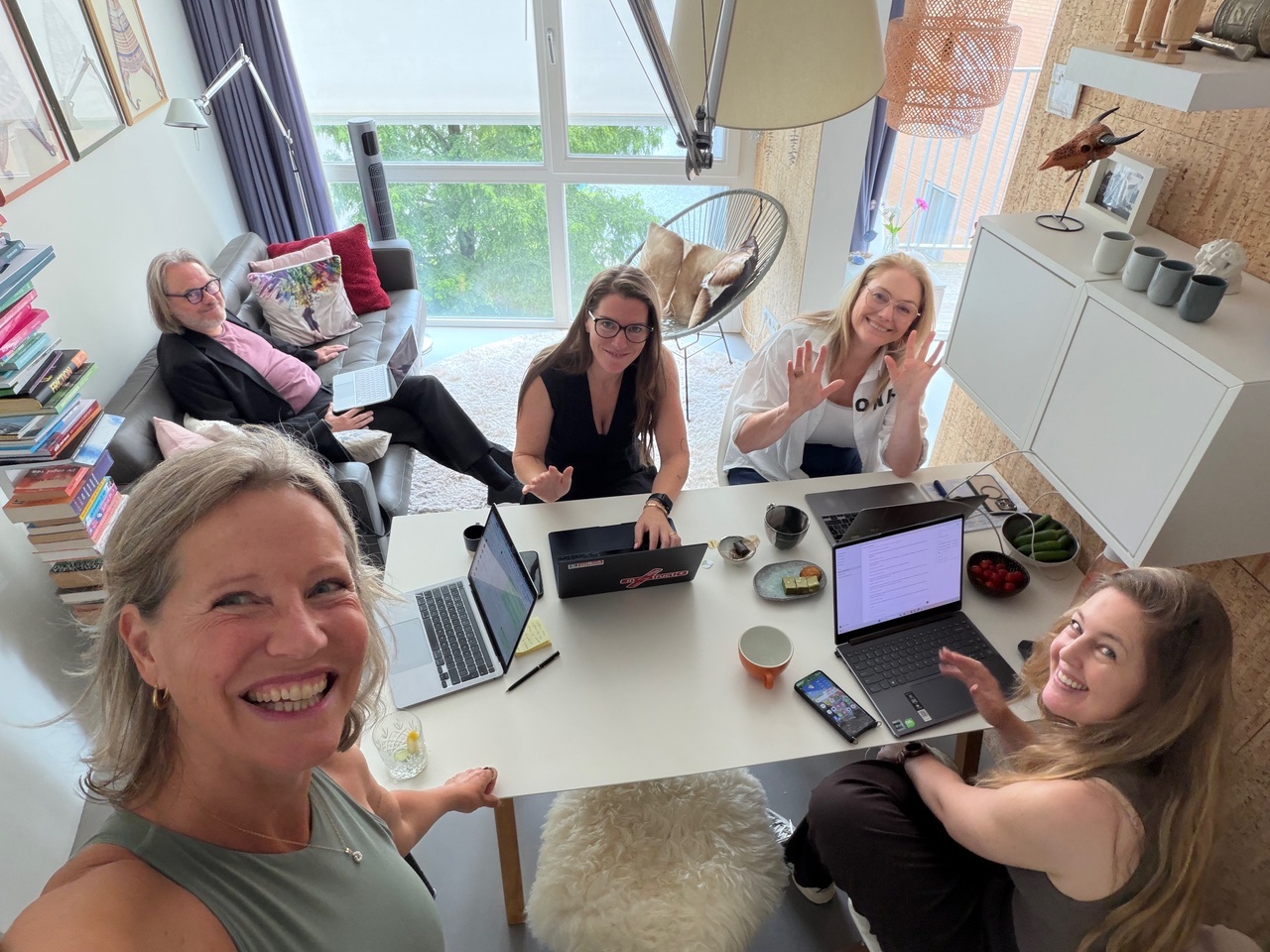
Want to get hands-on with AI?
During my hands-on AI day for entrepreneurs, you work in a small group on your own questions, bottlenecks and practical AI solutions you can use straight away. The workshop takes place in Amsterdam and is in Dutch.