

Malta
Why Malta doesn’t speak to me

I’ve been to Malta three times now: in the early nineties, in 2004 and in 2026.
And each time I leave with the same empty feeling.
Sure, the turquoise sea is stunning. The language is fascinating, a unique blend of Arabic, Italian and English influences. The centuries of history are everywhere. The fortified cities are remarkable, and the cathedrals, especially St. John’s Co-Cathedral, are breathtaking.
And yet, somehow, it doesn’t touch me.
I finally realized why.

A show of power
Much of the Malta we admire today was built by the Knights Hospitaller. After they were forced out of Rhodes by the Ottoman Empire, they spent years without a permanent home. In 1530 they accepted Malta. At the time, the island was poor and largely undeveloped.
What followed was extraordinary.
They built magnificent fortifications, palaces and churches. They turned the island into a statement of wealth, power and prestige.
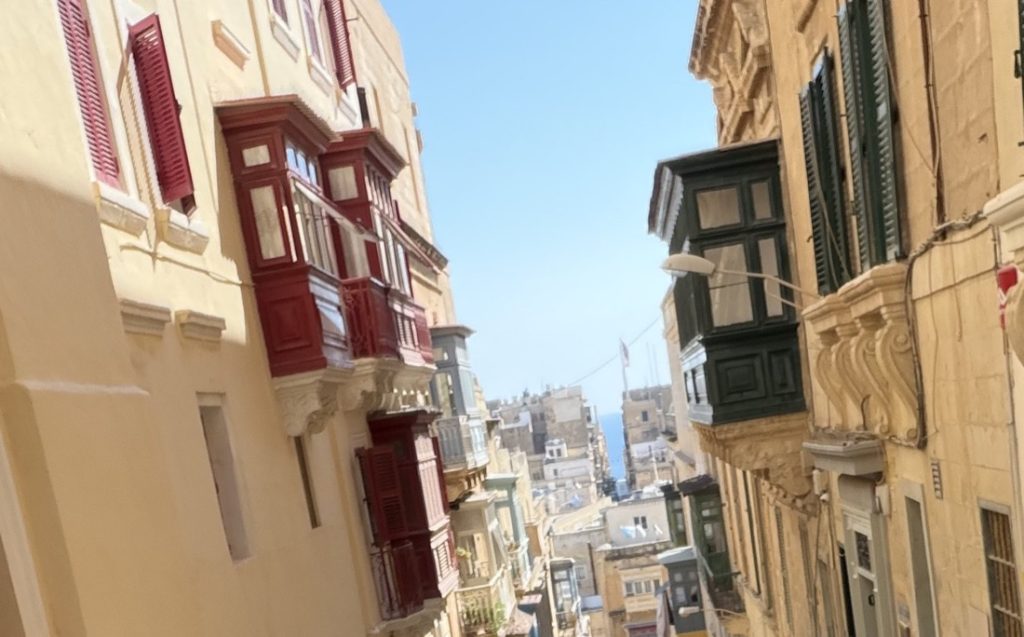
Even the famous enclosed wooden balconies tell a story. Wood is scarce on Malta, making these balconies expensive status symbols rather than practical architecture.
The same applied to social life.
Noble women stayed indoors to preserve their pale skin, a visible sign that they didn’t have to work. They would often sit behind those balconies with a book in hand. Whether they could actually read was sometimes beside the point. Looking educated was part of the image.
Attracting wealth and business
Every society has its own status symbols.
These happened to be Malta’s.
Perhaps that mindset never completely disappeared.
Today, Malta attracts international businesses with a favorable tax system. It has also become one of Europe’s biggest hubs for the online gambling industry. Again, there is nothing inherently wrong with that. It’s simply another way the island has positioned itself to attract wealth and business.
Maybe that’s why I never feel deeply connected here.
Searching for something real
When I travel, I look for places where life feels rooted in the landscape. Where traditions seem to have grown naturally from the land. Where people shaped the place, instead of the place being shaped to impress people.
I admire what was built in Malta: the resilience, the strategic thinking, the beautiful buildings and the history.
But I don’t feel the connection I feel in places where nature, culture and everyday life seem to have evolved together.
Maybe that says less about Malta than it does about what I’m looking for these days.