

How I Make Decisions When Nobody Knows the Answer
As I was listening to a podcast about how people experienced the pandemic, halfway through, I realised I probably lived a completely different pandemic than most people.
Some people barely left their homes for two years. Others worked in hospitals, lost loved ones, tried to keep businesses alive or suddenly had their children at home every day. My pandemic involved Curaçao, my father with Alzheimer’s, empty airports, Hollywood disaster movies, world maps, digital nomads and a flight into South Africa just as the rest of the world was trying to get out.
This is how I experienced it.
Catch the last flight. Just not home.
In March 2020, I was in Curaçao. When I heard that borders might close, my first thought was that I would stay right where I was.
Where could be better? The weather was warm, life happened outside, I could swim every day and there weren’t too many people. It seemed like a perfectly good place to wait and see what happened.
Then there was my father.
He lives in Florida and has Alzheimer’s. At the time, Dutch volunteer caregivers stayed with him for three months at a time. The people who were there wanted to return to the Netherlands before they got stuck in America. The next caregivers could no longer fly in.
That changed the situation immediately. I needed to get to Florida.
I already had a flight booked for a few days later, but one flight after another was cancelled. First I was told there might still be one in three days. Then two days. Then tomorrow. Finally, there was one last flight leaving that same day.
So I took it.
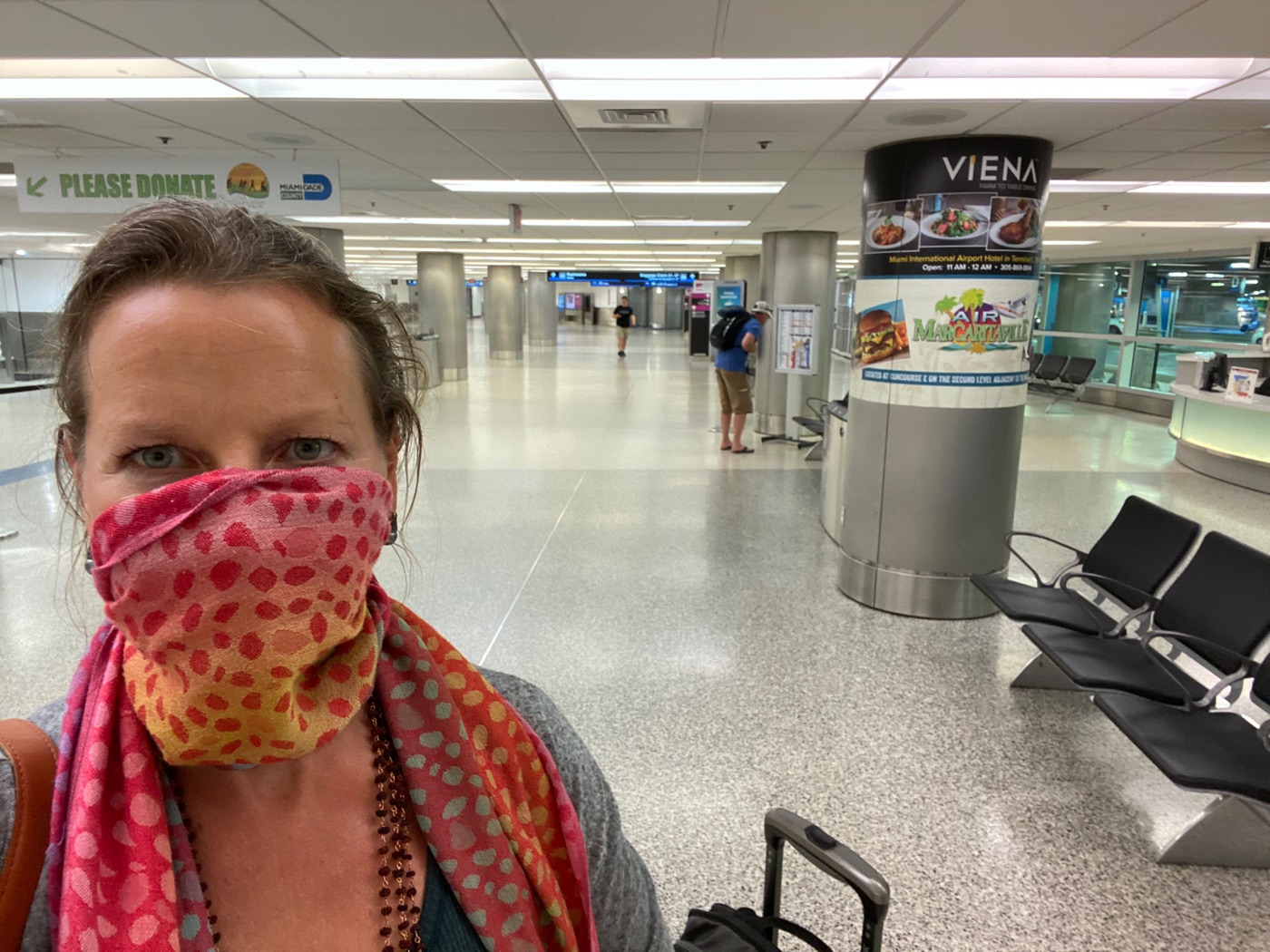
Most people were trying to get home. I was flying further away from mine, with no idea when I would be able to leave America again.
Hollywood explained people better than the news did
Once I arrived in Florida, I started watching films about pandemics and mysterious outbreaks. There were plenty to choose from.
It was partly entertainment. I also wanted to see what people did when they became scared. Who panicked? Who stayed calm? Which mistakes kept coming back? How did people expose themselves while believing they were being careful?
Hollywood may exaggerate the virus, but it understands human behaviour rather well.
Then I saw the real-life version in supermarkets. People carefully put on gloves before going inside. Those gloves then touched the shopping trolley, ten different products, the checkout screen, a wallet, a phone, car keys, the car door and the steering wheel. Later they got out of the car and touched everything again.
Everyone felt very responsible.
I kept thinking that if this virus had been as easily transmitted through surfaces as people feared at the beginning, half the population would have been dead within a week.
It showed me how quickly a routine can create a feeling of safety, even when the routine itself makes very little sense.
The problem nobody on TV was trying to solve
My main problem wasn’t how to avoid the virus. My father still needed somebody to live with him.
No new Dutch caregiver could fly in, and I couldn’t stay indefinitely. Instead of asking how to find another person in the Netherlands who could somehow reach Florida, I started looking at who was already in America.
There had to be American digital nomads who had suddenly become stranded in their own country. They travelled continuously, many didn’t have a permanent home, and now they could no longer leave.
I found someone who was happy to stay with my father and care for him for a while.
He needed a place to live. My father needed care. I needed the freedom to leave.
The solution appeared as soon as I stopped searching in the usual place.
Familiar isn’t the same as safe
Friends in the Netherlands kept telling me to come back because it was safe there.
Then I looked at the global map.
The Netherlands was dark red. It was densely populated and had a high number of cases. Other countries were much lighter. Still, my Dutch friends felt safer at home.
I understand that. Familiar places feel predictable. You know the language, the healthcare system, the roads and the rules. Yet familiar and safe are two different things.
I looked beyond my own country. Where were infection rates lower? Where did people live outside? Where could I move around freely? What rules applied there? What was actually happening, beyond the headlines?
That world map gave me a very different perspective from someone watching the situation only from the Netherlands.
The same virus. Completely different rules.
Countries were dealing with the same virus and making entirely different decisions.
The Netherlands chose one approach. Sweden chose another. Florida felt different from other American states. Italy had its own system. Schools stayed open in some places and closed in others. Some governments trusted people to make their own decisions. Others introduced strict rules.
Each country presented its policy as the sensible one.
That interested me. How could governments look at the same situation and reach such different conclusions? Which experts did they listen to? Which risks did they prioritise? What did they consider acceptable damage?
I compared the different approaches and formed my own opinion. I also kept adjusting it as more information became available.
That was important, because the information changed constantly. Claims were made with great certainty and revised later. Advice changed. Rules changed. Exceptions were added. The science was developing while governments were already making decisions.
That didn’t mean everything was false or that nobody should be trusted. It meant I didn’t want to rely on one government, one newspaper or one expert.
When the rules changed, I found another route
I kept travelling.
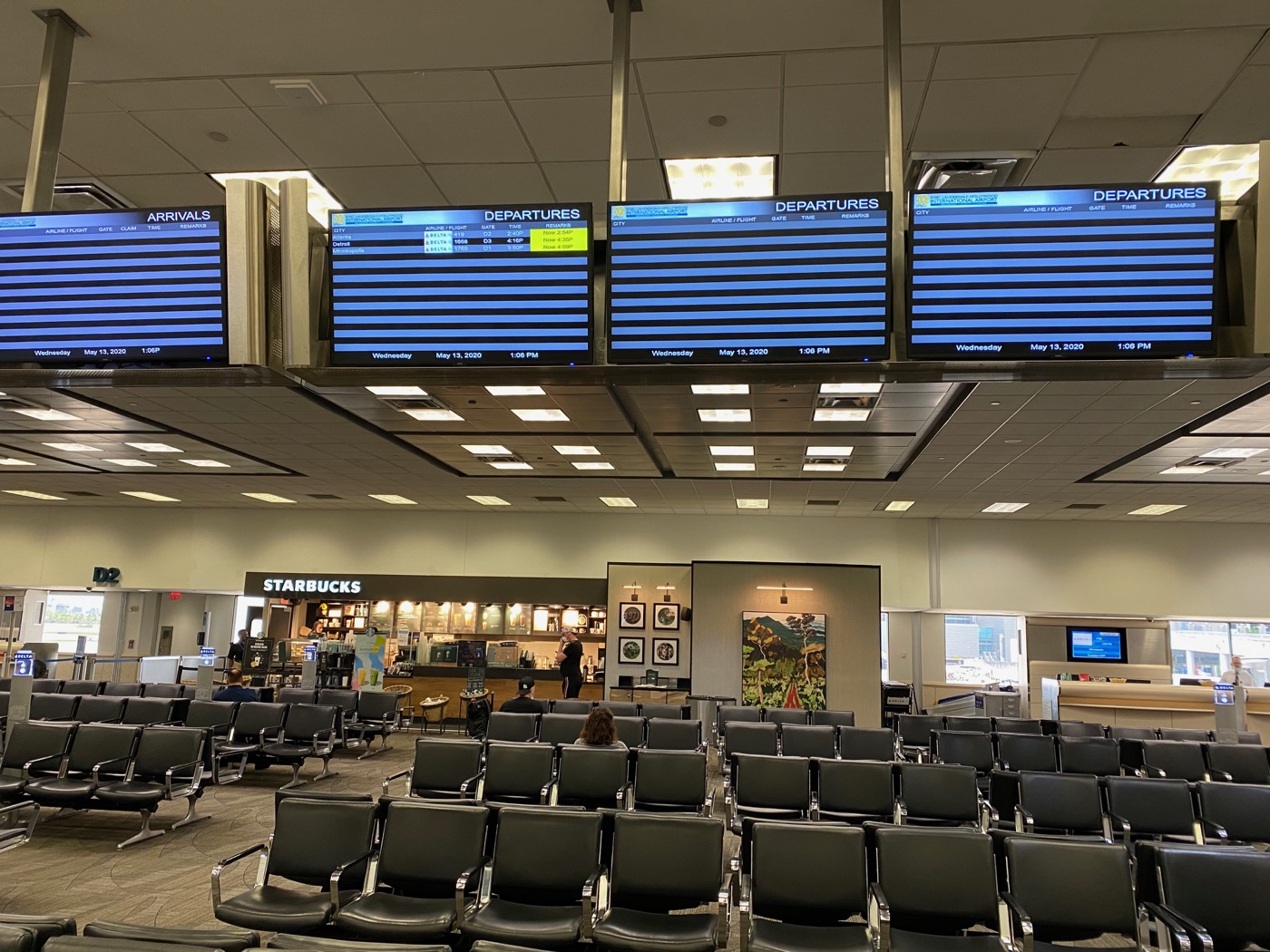
Many people now remember the pandemic as a period when travel was impossible. That wasn’t my experience. Airports were empty, but flights still left. Tickets could still be booked. Travel simply required more research, more paperwork and sometimes a creative route.
I spent time in Italy, the Netherlands, Mexico and South Africa. I looked for places that were open and where daily life still felt relatively free.
At first, travelling often meant taking a Covid test and presenting the certificate. Fine. A test became part of the routine.
Later, vaccination certificates were required for travel and for entering certain places. I had little confidence in the vaccines at that stage. They had been developed quickly, there was limited long-term information, and some of the early claims were soon adjusted. First, vaccinated people supposedly wouldn’t get Covid. Then they could get it, but supposedly wouldn’t transmit it. Then they could transmit it, but might become less ill.
I decided to wait.
At the same time, I needed a certificate to continue travelling and entering places. I found a way to obtain American documentation online, and a hospital in Italy later converted it into a European certificate.
Was that the route governments intended? Probably not.
Did it allow me to keep living my life while making my own health decisions? Yes.
Everyone was trying to get out. I took the last chance to get in.
Then a new variant was discovered in South Africa.
The headlines became dramatic almost immediately. Countries closed their borders. Flights were cancelled. People rushed to leave.
I decided to go to South Africa.
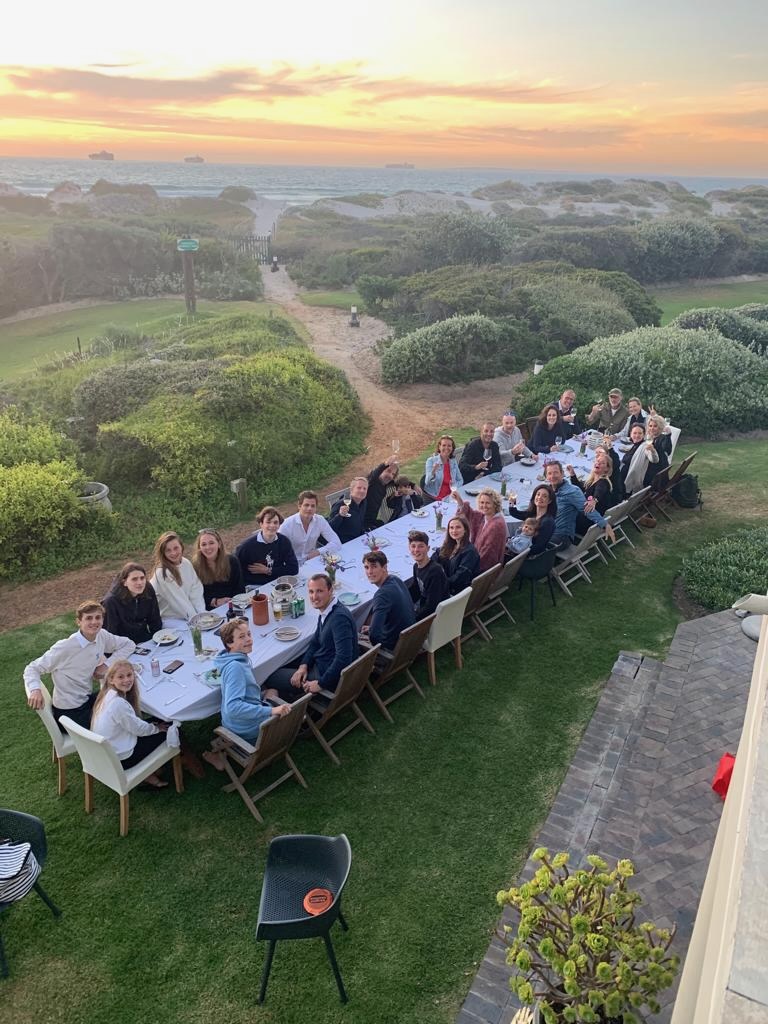
That might sound reckless from the outside. From where I was standing, it seemed logical. I knew South Africa. There was space, much of life happened outdoors and people still had a lot of freedom. I also expected Europe to introduce another wave of restrictions in response to the new variant.
So while people were taking the last flights out, I took one of the last chances to get in.
Around that time, I noticed another contradiction. People travelling from South Africa who were unvaccinated had to be tested. Vaccinated passengers often didn’t. Yet vaccinated people could also carry and transmit the new variant.
Everybody then boarded the same aircraft and flew to Europe.
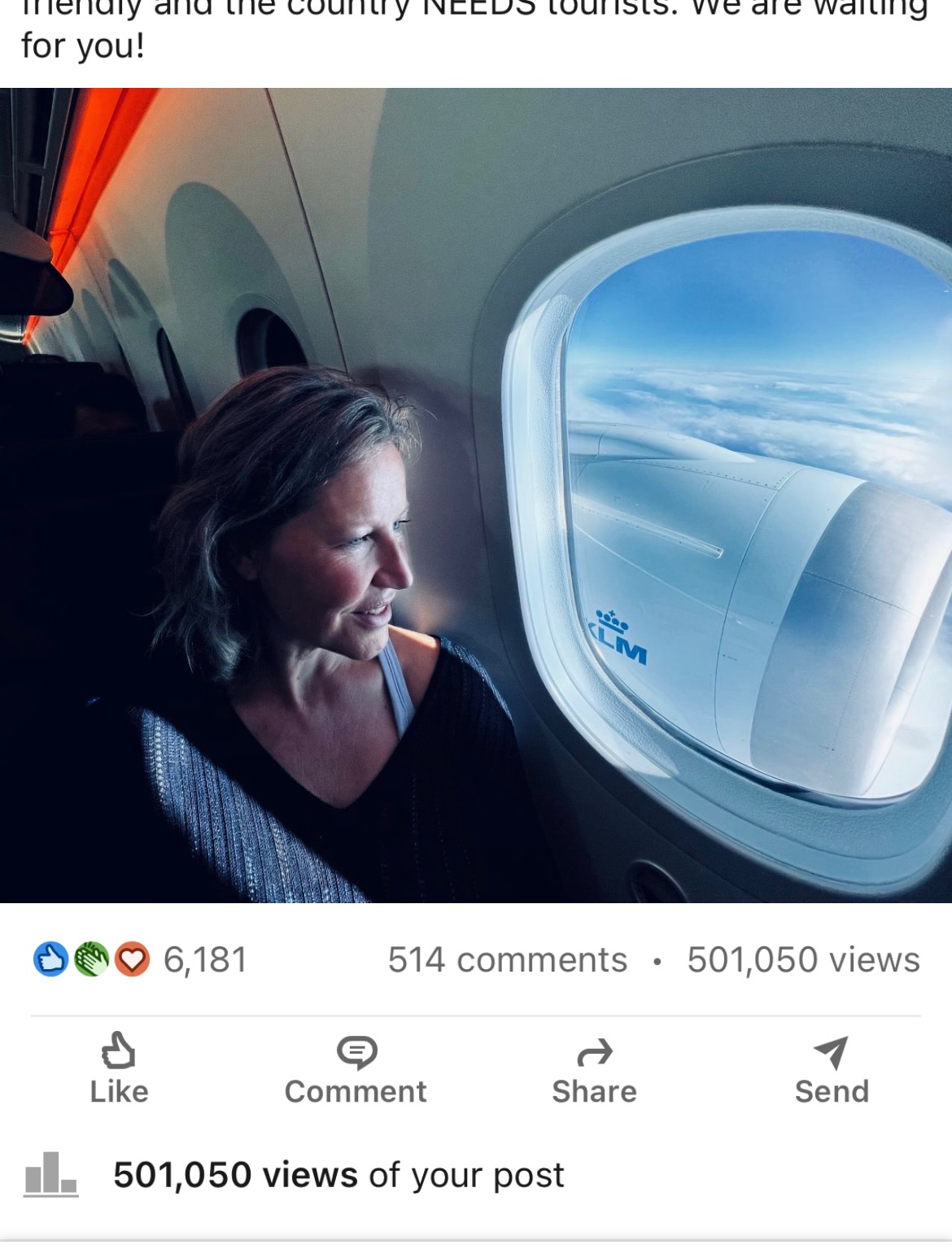
I wrote a LinkedIn post about that, THE IMPORTANCE OF TESTING. It received more than 700,000 views and comments from people all over the world. Many had seen the same problem. The testing policy looked reassuring on paper, but it didn’t match what was already known about transmission.
You didn’t need to be a scientist to see the gap. You only needed to follow the logic to the end.
I kept living
During the first two years, I didn’t take many extra precautions beyond the obvious. I washed my hands. I wore a mask where it was compulsory. I tested when it was required for travel. Then I continued with my life.
I didn’t get Covid during those first two years.
Eventually, I did get it. For me, it felt like a heavy flu.
Other people had a much harder time. Some became seriously ill. Some died. Some are still living with long Covid. I don’t dismiss any of that, and I don’t think my experience says anything about how somebody else should have handled theirs.
It only shows how different our experiences were.
The question I still ask myself
The podcast made me think about how much the scope of your view influences the decisions you make.
Are you looking at your own neighbourhood, your country or the whole world? Are you listening to one government or comparing ten? Do you accept the first explanation, or do you check whether the logic still works three steps later? Do you follow a procedure because it is effective, or because everyone around you is doing it?
Who do you trust?
And perhaps more importantly, how do you decide who deserves that trust?
I don’t assume I always make the right decision. During the pandemic, nobody had complete information. I made choices with what I knew at the time, and I accepted responsibility for them.
Whenever everybody starts looking in the same direction, I tend to look around and see what they might be missing. Sometimes I arrive at the same conclusion. Sometimes I find another solution. Sometimes I end up on one of the last flights into a country while everybody else is trying to get out.
That way of thinking has shaped far more than my experience of the pandemic. It has helped me travel to more than a hundred countries, build businesses, care for my father and find opportunities in situations that other people considered impossible.
When nobody knows the answer, I look wider, compare what I find and make my own decision.
Then I live with it.
Six years later, I hardly think about Covid anymore.
I do still think about how I make decisions.
Whenever everyone seems convinced there’s only one way to look at something, I automatically become curious.
What am I missing?
Who sees this differently?
What happens if I zoom out a little further?
Those questions have helped me far beyond the pandemic.
They’ve shaped the way I travel, build businesses, solve problems and make some of the biggest decisions in my life.